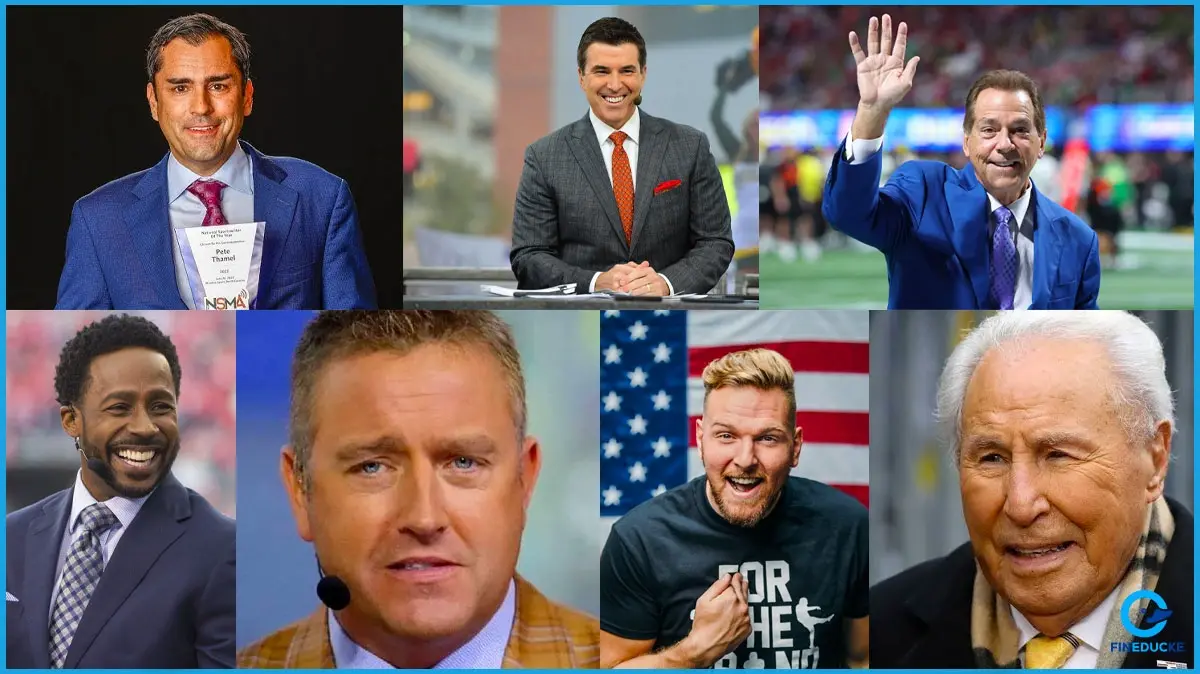
In 2026, ESPN College GameDay remains one of the most watched pregame shows in American sports.
The combined salaries of the College GameDay cast now exceed $30 million annually, with Pat McAfee and Kirk Herbstreit as the highest-paid personalities on the desk.
McAfee earns a reported $17 million per year under a five-year, $85 million hybrid licensing deal. The structure is not a traditional ESPN salary, it includes both talent compensation and production delivery for his show, and it has influenced how ESPN approaches content and budgeting across GameDay.
Herbstreit, meanwhile, earns from both ESPN and Amazon, placing him among the highest-paid figures in sports media.
His total earnings sit well above the NFL Today Cast, where the highest-paid host is JJ Watt at around $5.5 million, compared to Herbstreit’s estimated $6.5 million to $8 million range from ESPN alone, with additional income from his Amazon role pushing his total significantly higher.
This article breaks down the full 2026 College GameDay cast salaries and estimated net worths, along with how McAfee’s contract has reshaped the economics and direction of the show.
ESPN College GameDay Cast Salaries and Net Worth 2026
Here's the full picture at a glance before we get into the individual breakdowns.
|
Cast Member |
Role |
Est. 2026 Annual
Pay |
Est. Net Worth |
|
Pat McAfee |
Analyst / Production
Partner |
$17M (licensing
deal) |
$60M |
|
Kirk Herbstreit |
Lead Analyst |
$18M (ESPN + Amazon
combined) |
$90M |
|
Nick Saban |
Analyst |
$3M–$5M (est.) |
$80M |
|
Rece Davis |
Host |
$3M–$5M (est.) |
$4.5M |
|
Desmond Howard |
Analyst |
$2M–$3M (est.) |
$14M |
|
Lee Corso |
Analyst Emeritus
(retired Aug. 2025) |
$1M–$2M (est.) |
$12M |
|
Pete Thamel |
College Football
Insider |
$500K–$1M (est.) |
N/A (private) |
|
Stanford Steve
Coughlin |
Betting Analyst |
$400K–$800K (est.) |
N/A (private) |
|
Jen Lada |
Reporter |
$400K–$700K (est.) |
N/A (private) |
|
Jess Sims |
Reporter |
$300K–$600K (est.) |
N/A (private) |
Figures synthesized from Sports Business Journal, Front Office Sports, Awful Announcing, and industry benchmarks. Where contracts are not publicly disclosed, estimates reflect reported ranges from credible sports media sources.
Kirk Herbstreit | Lead Analyst
- 2026 Estimated Salary: $18 million
- Estimated Net Worth: $90 million

Herbstreit is the financial backbone of the GameDay desk. He pulls in a reported $10 million per year from Amazon for Thursday Night Football coverage and an estimated $6.5 to $8 million from ESPN for his GameDay and Saturday game-of-the-week duties.
That combined total of around $18 million annually, first reported by the New York Post's Andrew Marchand. Herbstreit’s $18 million puts him in an elite bracket of broadcasters, rivaling the 2026 salaries of the Today Show cast and other mainstream news anchors who traditionally dominated the top of the payroll.
His net worth sits in the $90 million range when you factor in nearly 30 years of broadcasting income, endorsements, and investments. Celebrity Net Worth still puts him at $12 million, which most industry observers consider significantly out of date given what Amazon has been paying him since 2022.
What makes Herbstreit irreplaceable on GameDay is credibility. He's been on the show since 1996. He calls games at the highest level. He's a five-time Emmy winner.
When ESPN needs someone to add weight and authority to a big moment, Herbstreit is the answer. In 2026, he also enters a contract cliff with both ESPN and Amazon simultaneously. If he stays, great. If he goes, there's no obvious replacement for what he does.
Pat McAfee | Analyst / Production Partner
- 2026 Estimated Annual Value: $17 million
- Estimated Net Worth: $60 million

McAfee's deal is not a traditional salary. It's a five-year, $85 million licensing contract signed in 2023 where ESPN pays for both his personal talent involvement and the production delivery of his daily show.
His full breakdown gets its own section below because the structure matters that much to understanding what GameDay has become.
Nick Saban | Analyst
- 2026 Estimated ESPN Salary: $3 million–$5 million (est.)
- Estimated Net Worth: $80 million

Saban retired from Alabama coaching in January 2024 after 17 seasons and six national championships, leaving roughly $70 million still on his $93.6 million coaching contract on the table.
He walked away from big money, and immediately stepped into big money. Alabama keeps him on as a $500,000-per-year advisor, and ESPN added him to the GameDay desk starting in the 2024 season.
The exact figure of his ESPN contract has not been made public. Given his profile, the competitive market for elite analysts, and how much ESPN values the Saban–McAfee dynamic, industry estimates place his annual salary in the $3 to $5 million range.
His net worth of around $80 million reflects his coaching career earnings plus his Dream Motor Group automotive dealership empire, which includes two Mercedes-Benz locations in Miami acquired in a deal reportedly worth $700 million. Saban is not just a football guy. He's built a serious business portfolio.
On the air, his calm authority is the ideal counterweight to McAfee's chaos. It works because both of them know exactly what they're doing.
Rece Davis | Host
2026 Estimated Salary: $3 million–$5 million (est.) Estimated Net Worth: $4.5 million

Davis is the most undervalued person on this list in terms of public recognition and the most important person to ESPN in terms of operational stability.
He has hosted the football version of GameDay since 2015 and, in early 2025, turned down what reports described as a "lucrative" Fox Sports offer to anchor Big Noon Kickoff and lead their FIFA World Cup coverage.
ESPN retained him with a seven-year deal reportedly worth "tens of millions of dollars" through the 2031–32 season.
His net worth of $4.5 million reflects a long career of steady, rather than astronomical, ESPN earnings. His older reported salary of around $1.5 million annually was pre-renewal. The new deal almost certainly upgraded that significantly, putting his annual pay comfortably in the multi-million dollar range.
Davis has been with ESPN for 30 years. His ability to manage a desk that includes McAfee, Saban, and Herbstreit simultaneously is genuinely difficult work. He is the traffic controller who makes all of it watchable.
Desmond Howard | Analyst
2026 Estimated Salary: $2 million–$3 million (est.) Estimated Net Worth: $14 million
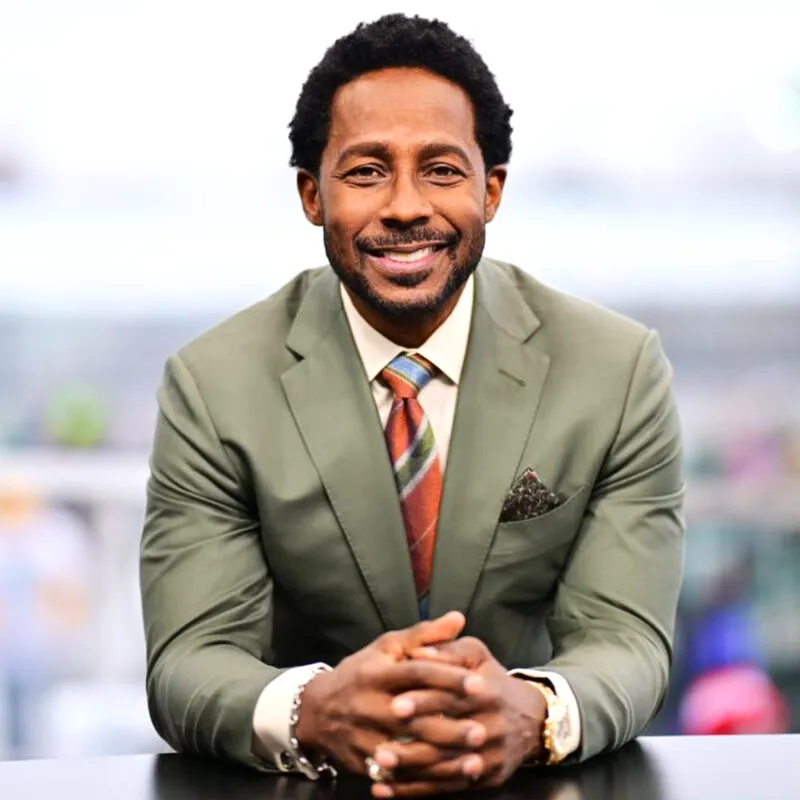
Howard has been on GameDay since 2005. He signed a multi-year extension with ESPN in August 2025, keeping him at the desk through at least the next few seasons.
His net worth of $14 million is a combination of 21 years of ESPN earnings and an NFL career that included Super Bowl XXXI MVP honors with the Green Bay Packers.
His estimated annual salary of $2 to $3 million puts him in the "legacy layer" of the GameDay budget. He's not the highest earner at the desk, but he provides something specific: the Heisman winner's perspective, a deep knowledge of the game, and two decades of institutional memory about what the show is and how it should feel. ESPN signed him to that extension for a reason.
Lee Corso | Analyst Emeritus
Final Estimated ESPN Salary: $1 million–$2 million (est.) Estimated Net Worth: $12 million
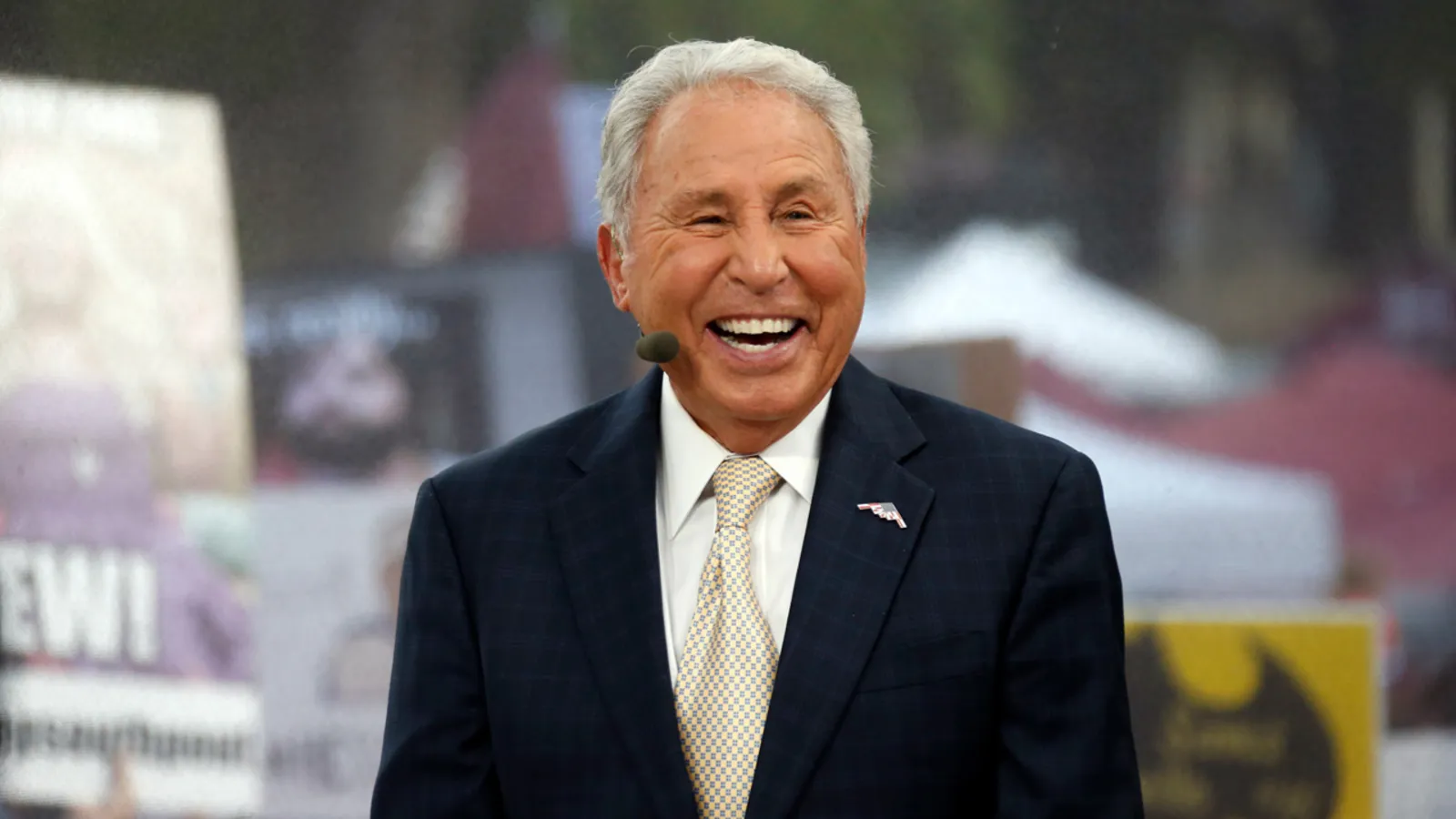
Corso retired on August 30, 2025, making his 431st and final headgear pick from Ohio Stadium. He correctly picked Ohio State over Texas. His all-time headgear record was 287–144.
The man joined ESPN in 1987 and was the last original GameDay cast member still on the show. His $12 million net worth reflects nearly four decades of broadcasting income and coaching career earnings.
His retirement leaves a significant personality gap at the desk, one that McAfee is now filling differently with a wrestling-style team selection promo that replaces the headgear segment.
For what it's worth, Corso's net worth is probably the most underreported number on this list. Thirty-eight years at ESPN, with annual renewals that grew steadily, likely produced far more than $12 million. But that's the public estimate.
Pete Thamel | College Football Insider
2026 Estimated Salary: $500K–$1M (est.) Net Worth: Not publicly disclosed
Thamel joined GameDay as a college football insider in 2022, bringing with him a national reporting reputation built over years at Sports Illustrated, Yahoo Sports, and other major outlets.
His role is defined by breaking news and insider knowledge on transfers, recruiting, and the changing legal landscape of the sport. In the era of NIL and the House settlement, having someone like Thamel on the show every week is operationally smart.
Stanford Steve Coughlin | Betting Analyst
2026 Estimated Salary: $400K–$800K (est.) Net Worth: Not publicly disclosed
Coughlin, a longtime collaborator with Scott Van Pelt on his "Bad Beats" segment, joined GameDay in 2023 as the show's dedicated sports betting analyst, taking over from Chris "Bear" Fallica who left for Fox.
His role reflects how the gambling economy has changed sports media. Legal sports betting is now mainstream, and ESPN has made it a regular part of GameDay's broadcast structure.
Jen Lada | Reporter
2026 Estimated Salary: $400K–$700K (est.) Net Worth: Not publicly disclosed
Lada has been reporting for GameDay since 2016. She produces the kind of storytelling segments that give the show emotional depth between the loud desk segments. Her work is consistent, high quality, and she's been a reliable part of the broadcast identity for nearly a decade.
Jess Sims | Reporter
2026 Estimated Salary: $300K–$600K (est.) Net Worth: Not publicly disclosed
Sims joined the GameDay team as a reporter in 2022. She provides on-site reporting, athlete interviews, and field coverage. Her role sits in a similar lane to Lada's, focused on the human stories behind the games.
Pat McAfee: The Deal That Changed Everything
To understand what GameDay looks like financially in 2026, you have to understand that McAfee is not a typical ESPN hire.
In May 2023, ESPN signed McAfee to a five-year, $85 million licensing agreement. That's $17 million per year. But here's the structure that most coverage misses: roughly half of that total goes to McAfee personally as a talent fee, and the other half covers the production and delivery of "The Pat McAfee Show" to the network.
Under the deal, ESPN receives 230 fully produced episodes of his daily program annually. McAfee keeps editorial control, his own staff, and his independent brand. ESPN gets the content, the digital engagement, and McAfee's weekly GameDay presence, all bundled together.
That's more like a licensing partnership than a traditional broadcast contract. It's similar in spirit to the model companies like Omaha Productions use. Instead of ESPN paying to produce a new show from scratch, they paid McAfee to bring his already-built show and platform into the building.
What ESPN got for that $17 million per year is enormous. McAfee's show generated over one billion social media views in a single month in September 2025. GameDay under his influence averaged 2.7 million viewers during the 2025 season, a 22 percent increase over the prior year.
His Kicking Contest segment drove a 35 percent surge in under-25 viewership. Those are numbers that justify the expense.
The move to ESPN's Bristol and Seaport studios also created indirect savings. Rather than maintaining a satellite-fed independent production facility in Indianapolis, McAfee's show now runs through ESPN's existing infrastructure.
The network avoids the capital expenditure of maintaining a separate high-fidelity uplink, and McAfee gains access to ESPN's broadcast rights library and league partnerships.
His net worth of $60 million reflects this multi-year run of high-income contracts. The ESPN deal, his prior $120 million agreement with FanDuel (which he opted out of early to join ESPN), his NFL career earnings of over $15 million, and his Pat McAfee Inc. media company have built a genuinely serious fortune.
Why GameDay Salaries Changed
For most of its history, College GameDay paid its talent on a relatively standard broadcast schedule. Analysts got analyst money. Reporters got reporter money. The show's brand was built on tradition, production quality, and the credibility of people like Herbstreit and Corso.
That math changed when ESPN started prioritizing digital engagement metrics alongside linear TV ratings. The M18–34 demographic became critical. Streaming competed with cable.
And suddenly the question for sports networks was not just "who is the most knowledgeable analyst" but "who brings their own audience with them."
McAfee brought 2.5 million YouTube subscribers, an enormous social media following, and an entirely new demographic into the GameDay tent. ESPN's willingness to pay $17 million per year for that is a statement about where the business is going. Engagement now drives the economics. Personality is the product.
The Economics of College GameDay
The show is still a traveling production. That costs real money. A full on-campus GameDay broadcast in 2026 runs between $750,000 and $1 million per episode once you count 100-plus traveling crew members, satellite infrastructure, site fees, security, and insurance for a crowd that can exceed 20,000 people. Over a 15-week regular season, production alone can approach $15 million.
ESPN has been countering that burn rate in two ways. First, they've accelerated the use of REMI production, where minimal on-site crew handles the physical presence and the actual switching, graphics, and audio engineering are done remotely from Bristol or New York.
That hybrid model cuts per-episode costs to roughly $300,000–$500,000. A fully studio-based show costs as little as $100,000–$200,000 per episode.
By shifting even four to six shows per season to a studio or hybrid model, ESPN saves $3 to $5 million annually. Those savings aren't going back to shareholders. They're being recycled into the talent contracts that drive the reach and engagement that advertisers are actually paying for.
This is also where McAfee's deal makes a different kind of sense. Because the show's production is bundled into his licensing fee, ESPN avoids some of the variable cost structures they carry with traditional programming. They know what they're paying per year. That predictability has real budget value.
The Key Cast Balance: Herbstreit, McAfee, and Saban
ESPN needs all three of these men for different reasons, and pulling any one of them would change what the show is in a meaningful way.
Herbstreit is the credibility anchor. He's been calling games at the highest level for three decades. When he analyzes a quarterback's footwork or breaks down an offensive line, viewers and coaches alike take it seriously. His presence tells the audience that the show has standards.
McAfee is the engagement engine. He is the reason a 22-year-old who doesn't watch traditional television finds GameDay on YouTube or through his Twitter feed.
He is the reason the kicking contest segment exists and why it drives more under-25 viewership than almost any other segment on the show. He disrupts the format in ways that produce results.
Saban is elite coaching authority. No one on that desk has his résumé. Six national championships. A career record of 292–71–1. A generation of head coaches who learned from him.
When Saban says something about what a program is or isn't doing correctly, it carries the weight of someone who actually did it. His calm, blunt style contrasts with both Herbstreit's polish and McAfee's energy in a way that gives the desk genuine dimension.
The show doesn't work as well with only two of these three. That's how ESPN built the budget around them.
Industry Pressure: NIL, House v. NCAA, and What It Costs ESPN
The largest external pressure on GameDay's budget right now has nothing to do with talent contracts. It has to do with the athletes.
The House v. NCAA settlement, approved in June 2025, formalized a $1.8 billion payout for Broadcast NIL claims covering athletes between 2016 and 2024.
Going forward, schools can now share up to $20.5 million annually directly with their athletes from athletic revenue. That money flows from media rights fees. Media rights fees come from networks like ESPN.
As schools face new mandatory athlete compensation costs, conferences will push for higher rights fees in the next round of negotiations. ESPN has already committed to a $7.8 billion deal for College Football Playoff rights.
That number is going up. And so is the pressure to make sure every dollar spent on GameDay talent is producing measurable return.
The athlete pay comparison is striking. Pat McAfee's $17 million annual deal makes him worth roughly three times Arch Manning's NIL valuation of around $5.4 to $6 million, which is the highest of any college athlete in the country.
The person talking about the game earns exponentially more than the best players in it. That gap is the defining financial reality of college football media right now, and it creates ongoing tension about where the sport's money should actually go.
Conclusion: Same Show, Different Financial DNA
Visually, College GameDay looks like what it has always been. There's a loud crowd, a campus backdrop, three hours of analysis, and this year, Pat McAfee delivering a wrestling promo where Lee Corso's headgear pick used to close the show.
But underneath that familiar format is a fundamentally restructured financial operation. ESPN has shifted from paying broadcast talent like traditional analysts to paying media personalities with their own platforms and built-in audiences.
McAfee's licensing model is the clearest expression of that shift. Rece Davis's retention on a seven-year deal shows how seriously the network takes continuity at the host position.
Saban's addition was a calculated bet that coaching credibility would drive ratings. And Herbstreit's dual-network deal is the template for where elite sports broadcasting talent is heading next.
The show's future is not uncertain. It's actually well-mapped. High-cost personalities who drive digital engagement. Reduced operational costs through hybrid production.
More licensing-style partnerships and fewer traditional hire-and-salary structures. And an ongoing tension with the athletes whose games the show is built around, who are only now beginning to see real money from the system that has always profited from them.
College GameDay is not broken. It is, by most measures, more popular than it has ever been. It's just being run very differently than it was ten years ago, and the cast salaries listed above are the clearest evidence of how.
Sources: ESPN Press Room, Front Office Sports, Sports Business Journal, The Athletic, New York Post (Andrew Marchand), Celebrity Net Worth, On3.com, A to Z Sports, Awful Announcing, Bleacher Report.