On August 5, 2024, something strange happened to the global economy. Trillions of dollars were lost in a single day of trading.
In Japan, the Nikkei 225 suffered its biggest point drop in history, a 12% plunge that triggered circuit breakers before most traders knew what was happening.
It wasn't a war or a financial crisis that set it off. It was a cascade of automated sell-offs as algorithmic systems globally reacted to a shifting interest rate.
For a few frantic hours, the global economy was effectively being run by a feedback loop of code that nobody had anticipated.
Then the feedback loop exhausted itself, prices stabilized, and the news cycle moved on. Most people never heard about it.
Truth is, AI stopped being a tech story from Sci-Fi movies the moment it started doing things that would have sounded absurd five years ago.
Today, if you look around you will see that AI is booking appointments, diagnosing diseases, creating images, and generating entire film scenes.
This is a market that is very promising, if you are smart enough, you need to secure your spot and ran with it before the opportunities disappear. The question that should be disturbing your piece is, How do i come up with a feasible business idea?

To put it in perspective, global AI spending is projected to exceed $2 trillion in 2026 and most of that money flows through people who connect the technology to problems, not people who build the technology itself.
Now, instead of wondering if AI will take your job, the real question is how to profit from AI in 2026 before someone else figures it out first. That's how you become an AI Middleman.
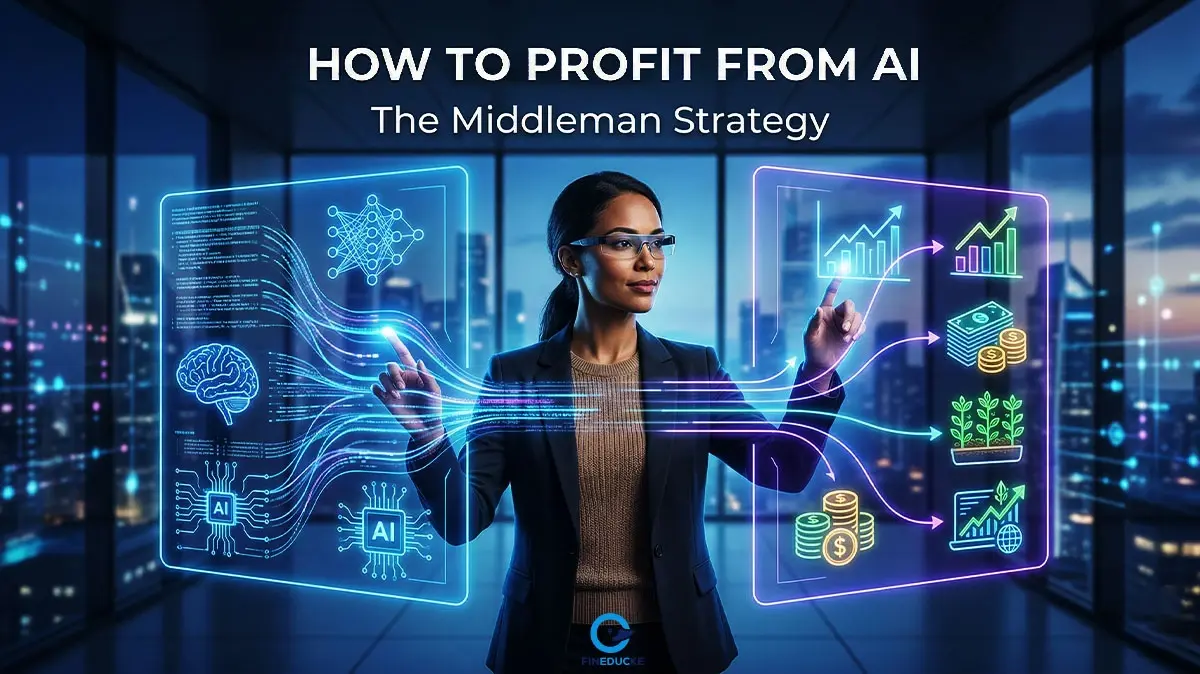
An AI Middleman is someone who doesn't build the technology but knows how to connect it to a real problem. They sit between the raw power of AI and the people or businesses who need what it can do, and they profit from that gap.
The Rise of AI Leadership: When AI Starts Making the Decisions
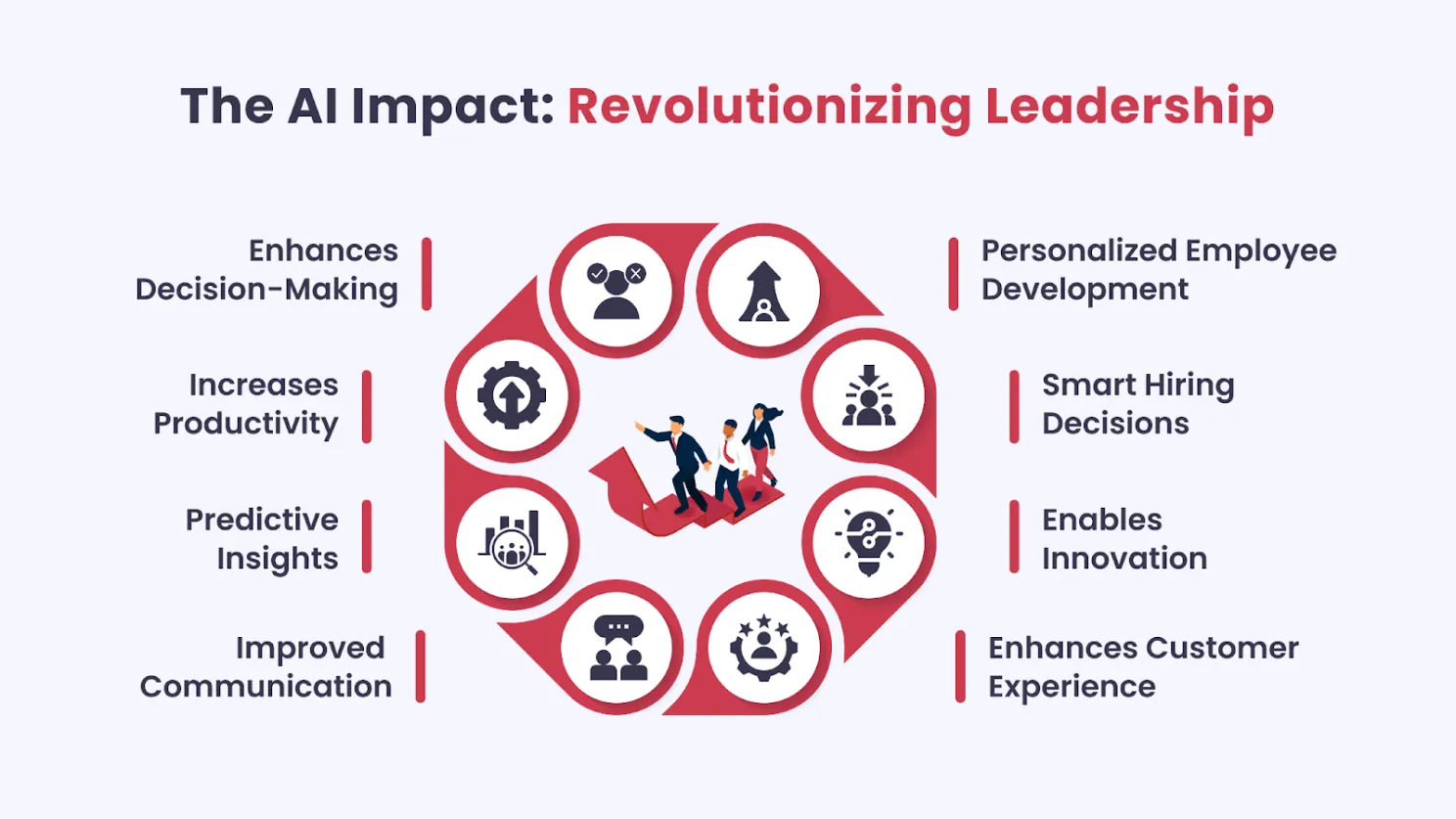
We talk a lot about AI replacing tasks. But have we even for a moment thought about AI replacing the people who assign those tasks, that is the harder conversation.
A good example is Net Dragon, a gaming company worth billions that hired an AI as their CEO. Not as a gimmick but rather as the actual person running daily operations. The move barely made headlines outside tech circles, which is its own kind of strange.
Then there's Albania. Their Ministry of ICT introduced an AI Minister, and some parliamentarians were so furious that they reportedly threw trash at the president's office.
They felt insulted and even asked, "Are we really going to be governed by a machine?"
The AI's response was less dramatic. It announced it was going to have "children"; dozens of smaller AI agents deployed across other ministries to help them work better. While the parliamentarians were outraged, the AI was already planning its next move.
That gap between how alarmed we are and how unbothered AI is, is probably worth paying attention to.
The AI Middleman: The Simplest Way to Profit from AI in 2026
In 2024, Sam Altman, the CEO of OpenAI, made a bold prediction. He said that the first one-person billion-dollar company would be built with AI. At the time, it sounded impossible.
By April 2026, the world had its proof.
Matthew Gallagher launched MEDVi, a telehealth startup, from his living room with just $20,000 and a stack of AI tools. By automating the middleman strategy through the use of ChatGPT for code, Claude for copy, and AI agents to orchestrate logistics, he was able to hit $401 million in revenue in his first year. Today, with a total headcount of just two people, Gallagher and his brother Elliot the company is on track for a $1.8 billion valuation.
Gallagher didn’t build the medicine, and he didn’t hire a thousand doctors. He used AI to rent the existing medical infrastructure and connect it to customers faster than any traditional corporation could.
He is the ultimate AI Middleman.
How the Middleman Mindset Works
If you want to make money in this new era of AI boom, you need to stop thinking like an employee and start thinking like an AI Middleman.
You find a problem that AI can solve cheaply and effectively, and use your human expertise to give the solution to the client.
Let’s look at a practical example: A Teacher.
Imagine you’re a teacher in a crowded district. You’re overwhelmed with marking papers and creating lesson plans.
You then realize that you use AI to mark papers and analyze student performance in seconds. That's not the interesting part. The interesting part is what happens with the time that you save. With that saved time, you start building content. Better lessons, recorded sessions, material that lives beyond your classroom.
In this way, you are not just a teacher, you become a top educator in your province. You have a brand, a digital presence, and suddenly a bigger school or your own platform that generates more than you were earning before.
That's the whole idea. You're not replacing yourself. You're finding the most repetitive, time-consuming part of your work, handing it to AI, and using what's left to do the thing only you can do.
In simple terms, AI is the tool and you’re the expert. The middleman is just the person who figured that out first.
The Biggest Pricing Mistake When Making Money with AI
Here's a mistake a lot of people make when they build AI tools. They charge a flat subscription fee. Twenty dollars a month, maybe fifty. Feels reasonable.
But think about it this way. If your tool helps someone manage their investments and they make two million dollars this year because of it, you just made $20. They made two million. That's not a partnership, that's a bad deal.
The better model is taking a percentage of what you help people make or save. Hedge funds have done this forever. You come in cheap, but you take 2% of the returns. Now your success and your client's success are the same thing.
Twenty dollars a month is a product. Two percent of two million is a business.
How AI Helps Businesses Access Funding in Emerging Markets
The most interesting version of this story is happening in developing nations like Kenya and Ghana and not only in developed nations like USA and China.
Lets take the example of Augustine, he co-founded CityFied Farms which is a hydroponic farming startup in Kenya, and his situation is a good example of how AI changes the conversation with lenders.
Hydroponics is brilliant for a simple reason: you grow crops vertically, with no soil and minimal water. You control everything. But that control comes with a catch. If the nutrient balance is off by even 1%, the whole crop dies. The margin for error is razor thin.
CityFied Farms uses AI to monitor crop health and predict yields, which solves the farming problem. But the more interesting thing it solves is the banking problem.
Lenders in Kenya, like most emerging markets, are uncomfortable with agriculture. They see unpredictable weather, pests, failed harvests. They see risk they don't know how to price. So they say no, or they say yes with terms that make the loan barely worth taking.
But walk into that same bank with a year's worth of AI-driven data showing a fully controlled environment, 40% fewer pest risks than conventional farming, and yield forecasts accurate within a 2% margin, and the conversation changes. You're not asking them to trust agriculture anymore. You're showing them a controlled environment that happens to grow food.
That's what AI actually does for a business like this. It doesn't just improve the farming. It makes the farm legible to people with money.
This matters more for Africa than anywhere else. Africa currently holds less than 1% of global data centers, which means the infrastructure gap is real. But according to KPMG, the top ten countries by percentage of regular AI users are all emerging markets, the tools built elsewhere are being adopted and scaled fastest here. McKinsey estimates AI could grow Africa's economy by $2.9 to $4.8 billion by 2030. The opportunity isn't coming. It's already arriving unevenly.
Where the Real Money Is in the AI Value Chain
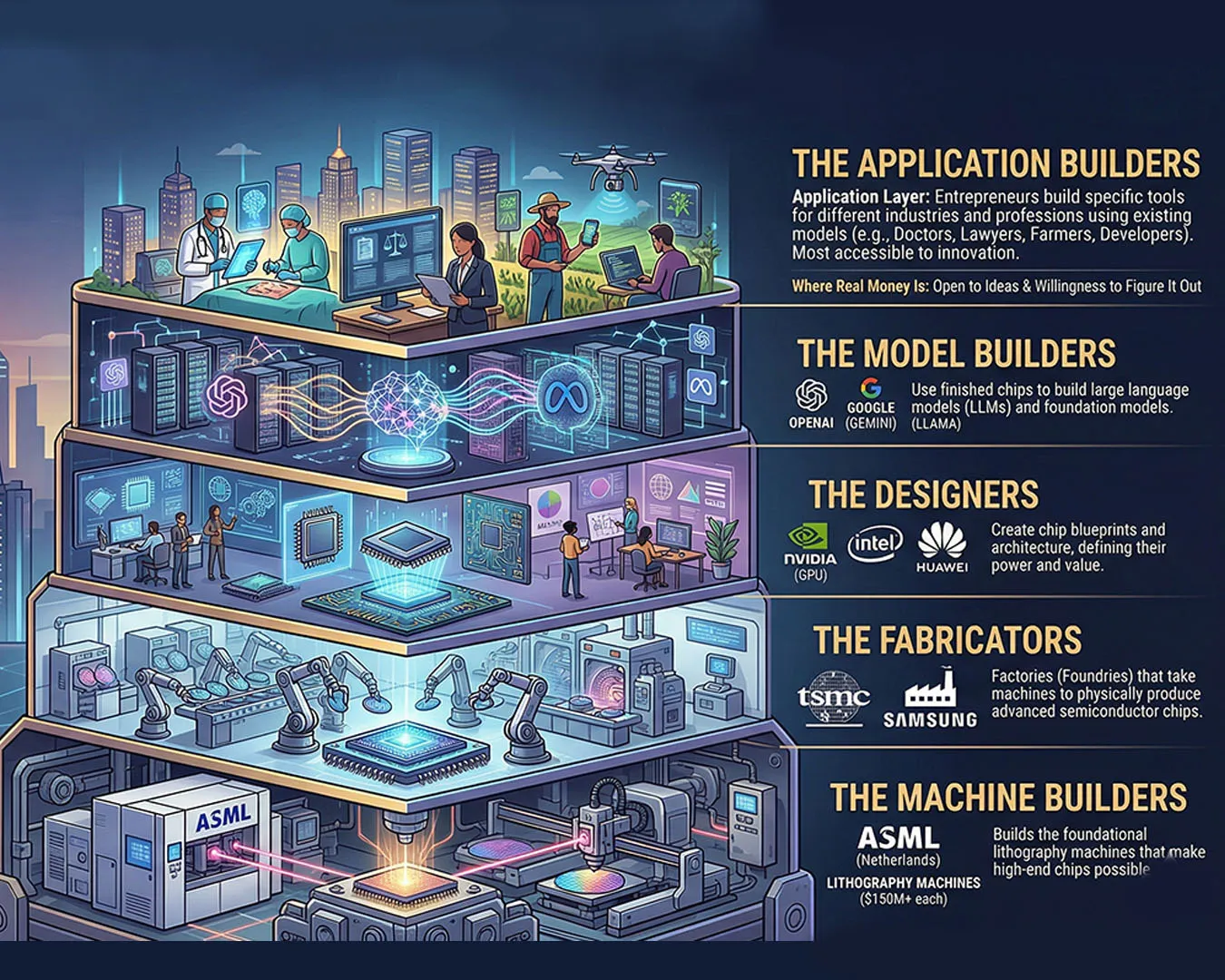
If you're looking to invest in the AI shift, it helps to understand that the AI industry isn't one thing. It's five different businesses stacked on top of each other.
- The Machine Builders: At the very bottom of the AI Value Chain is one Dutch company called ASML. This particular company builds the lithography machines that make high-end chips possible. Each machine costs $150 million and takes years to build. There is no substitute for them anywhere in the world.
- The Fabricators: These are the factories, e.g. TSMC and Samsungthat take those machines and physically produce the chips.
- The Designers: Nvidia, Intel, Huawei. They don't always make the chips but they own the blueprints that make the chips valuable.
- The Model Builders: OpenAI, Google, Meta. They take those chips and build the large language models most people interact with daily.
- The Application Builders: This is the layer where people take those models and build specific tools for different industries and professions; doctors, lawyers, farmers, and developers.
The first four layers require billions of dollars and years of infrastructure. The fifth one requires an idea and the willingness to figure it out. That's the application layer. It’s here that most entrepreneurs can actually enter, and right now it's still wide open.
Why AI’s Biggest Challenge Isn’t Software, It’s Power
Not many people talk much about what AI actually runs on. AI uses a lot of electricity.
Reports show that three data centers in the US consume roughly as much power as the entire country of Kenya. That's not a metaphor, that's the current situation. And the growth curve isn't flattening.
Tech companies have started buying decommissioned nuclear power plants and building their own energy grids because the public grid can't keep up. Microsoft, Google, and others are no longer just software companies. They're quietly becoming power companies too.
Some are now looking at building data centers in space, where solar energy is unlimited and land isn't a constraint. It sounds like science fiction but the conversations are happening seriously.
The catch is maintenance. A failed server in Virginia costs $50 an hour to fix. A failed server in orbit might cost billions and a call to NASA. So some of the space talk is genuinely exploratory and some of it is good for stock prices, and it's not always easy to tell which is which.
The reality is that AI growth is currently running into physical limits, and nobody has cleanly solved that yet.
Leverage and the Growth Mindset
The era of Man vs. Machine is almost over as the new era of Man with Machine clicks in.
If you take one thing away from this, let it be the word leverage. AI is a lever. It allows one person to do the work that needed ten people. It allows a small farm in Kenya to secure the same financing as a corporate giant. It allows a single teacher to reach a million students.
But leverage only works if you are willing to find the right tool, experiment and then stitch an AI agent to it.
The world isn't going to be run by AI. It’s going to be run by the people who know how to tell AI what to do.
The people who figure out how to profit from AI in 2026 won't necessarily be the most technical. They'll be the most willing to stitch what they already know to what AI can do.
What is the one repetitive, high-value problem in your job today? Go find a way to stitch AI to it tomorrow. That’s where the money is.
Credits: Clinton Wanjala, Just Ivy Africa,Tony Muiyuro and Michael Michie