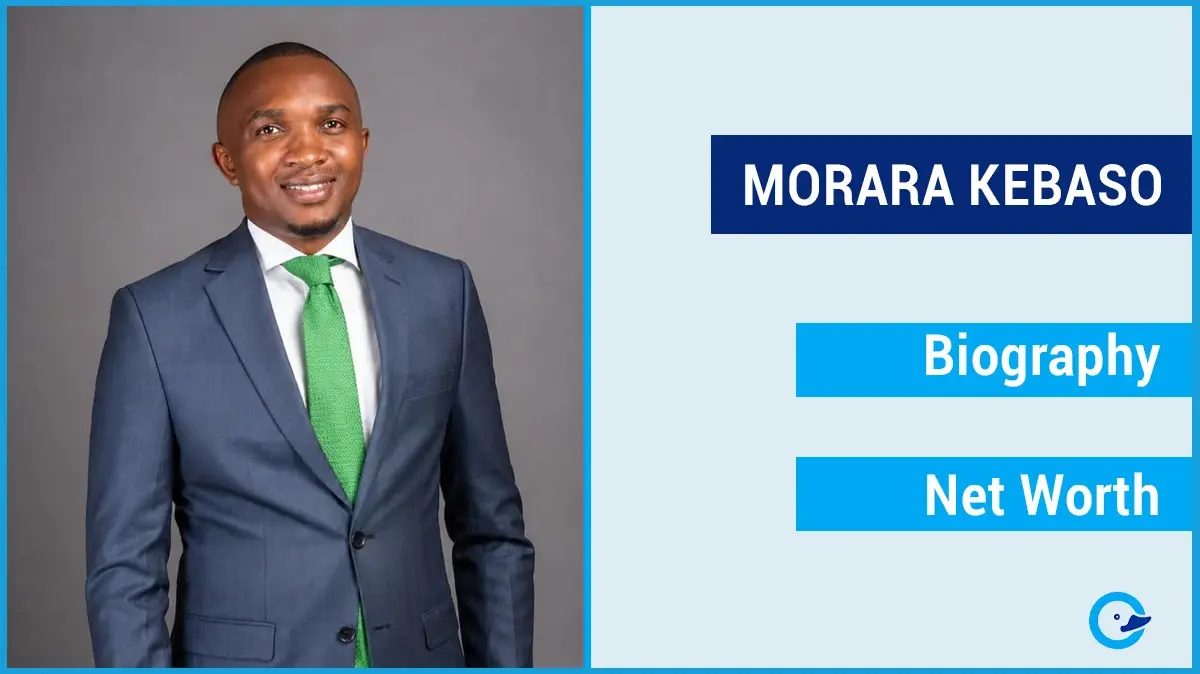
Morara Kebaso has become one of the most popular individuals, especially when it comes to politics. He is a businessman, political activist, and vocal critic of the government. In a candid interview with Dr. Kingori, he revealed that his net worth exceeds KSh 100 million.
This article breaks down how he built that wealth, the businesses behind it, the income streams fueling it, and the controversies that have followed him along the way.
Morara Kebaso Quick Facts
- Real Name: David Morara Kebaso
- Birthday: 26th September, 1996
- Age: 29
- Generation: Millennial (Gen Y)
- Marital Status: Married
- Wife: Mercy Morara
- Children: 2
What Is Morara Kebaso's Net Worth in 2026?
Based on his own public statements, Morara Kebaso's net worth is above KSh 100 million. In the Dr. Kingori interview, he was direct:
"I don't want to talk about my net worth, but it is way above 100 million."
That said, no independently audited financial statements have been made public to verify Morara’s net worth. The estimate is based entirely on Morara's own declarations and the scale of his reported businesses.
For context, KSh. 100 million is around $770,000, placing him in the high-net-worth tier for his age in Kenya.
He was 29 at the time of the interview and had already built a multi-business portfolio spanning furniture, real estate, fashion, and security. Whether the number is an exact figure or a floor, the breadth of his business operations makes it credible.
How Morara Kebaso Built His Wealth
The main source of Morara Kebaso’s wealth comes from business, particularly carpentry and not inheritance compared to many rich people in Kenya.
His business career began in Kawangware, where he operated a hotel and an avocado business. Morara also revealed he taught mathematics and physics at Kabiru Secondary School and used to run other businesses, including wines and spirits, online writing, selling insurance, and land.
"In terms of hustling. I have done many things. I had a hotel in Kawangware 56. We lived in a single room in Kawangware Soko Mjinga, where we paid KSh 1800 (rent). I sold avocado that used to come from Kisii at KSh 5 then we resell at KSh 15. We used to make good profits, I should go back to that business," Morara recalled in an interview.
He later started working in the furniture business, where he developed a hands-on understanding of manufacturing and clients' needs.
That foundation became Morara Home Furniture, which was started in 2019 and later grew into a full-scale interior fittings operation based in Utawala, Nairobi.
From there, he diversified and moved into real estate through Morara Properties Limited, which converts shipping containers into functional offices and commercial units. It is a lower-cost model that taps into demand for affordable commercial space in urban Kenya.
Fashion followed with Luku Fashion, then added a private security arm through Backtent Security Limited. Each venture reflects the same pattern: spot a gap, build something practical, keep adding income streams.
According to him, a good business is one that has the ability to scale, which forms the foundation of his core business principles, as broken down in this 6 Insider Secrets to Running a Successful Business article.
Marrying at 21 also played a role in shaping his financial trajectory. He credits the discipline and structure that came with family life as a turning point in how he runs his businesses.
Businesses Owned by Morara Kebaso
Here is a breakdown of the known businesses in Morara Kebaso's portfolio:
- Morara Home Furniture is his flagship venture. It is a carpentry and interior fittings workshop in Utawala, Nairobi. According to KRA's investigation, this business alone accounted for approximately 80% of his total declared business revenue over three years.
- Morara Properties Limited handles his real estate interests, focusing on converting shipping containers into workspaces and commercial premises.
- Luku Fashion is his fashion label, adding a retail dimension to his income base.
- Backtent Security Limited is his private security company, rounding out a genuinely diversified business portfolio.
Morara Kebaso's Sources of Income
Morara Kebaso's income comes from various sources. His primary source remains manufacturing, particularly the furniture and carpentry business.
Morara Home Furniture handles manufacturing and interior fittings. His real estate venture generates rental income from businesses needing affordable premises.
Luku Fashion adds retail revenue, and Backtent Security Limited brings in contract income from the private security sector.
The Role of Marriage in His Success
Morara married at a very young age, to be specific, he married when he was only 21 years. According to him, marriage has played a critical role in his success.
He has repeatedly noted that when partners work toward the same goals, expenses are shared, focus is maintained, and there is less room for wasteful spending.
"Marriage gave me discipline and direction. When you have a supportive partner, the journey to success becomes smoother," he said.
He also told Dr. Kingori that men who work alongside their spouses can save and grow wealth up to three times faster. His wife, by his account, kept him grounded during the early stages and helped him stay committed to building rather than spending.
KRA Tax Investigation Explained
In January 2025, KRA launched an investigation into Morara Kebaso's businesses, alleging his companies owed KSh 27 million in unpaid taxes. The agency summoned him to provide financial documentation: bank statements and invoices.
KRA's investigation covered four companies: Morara Home Furniture, Luku Fashion, Morara Properties Limited, and Backtent Security Limited.
The agency alleged that transactions across these businesses totaled KSh 186.3 million over three years and that income had not been properly declared in tax. Specific claims included KSh 25.7 million in outstanding VAT and KSh 1.4 million in unpaid income tax.
Morara denied the allegations. He maintained that he had always complied with Kenya's tax laws and accused the government of targeting him because of his public criticism of the tough economic times under President Ruto’s administration.
"This is a clear attempt to silence me and force me to work with corrupt leaders," he said.
He also denied any connection to a fifth flagged company, Igrow Digital Enterprise, explaining it was a dormant entity registered with university classmates in 2014 for a dog-breeding venture that never launched.
These are allegations. No court verdict establishing tax fraud has been publicly reported, and Morara has consistently maintained his innocence.
Public Fundraising and Criticism
One of the most-discussed contradictions in Morara Kebaso's public life is the tension between his declared wealth and his fundraising activities.
After his KSh 100 million net worth claim went public, many Kenyans who had previously donated to his paybill campaigns reacted with frustration. Social media filled with comments questioning why a wealthy man was still asking ordinary people for money.
Morara's response was unapologetic. He drew a firm line between personal wealth and public causes. His position: fundraising for civic and political activities is not a personal ask. Public affairs should be funded by the public.

"With regards to paybill and fundraising the answer is yes I will continue because public affairs should be funded by the public," he wrote on X in response to the backlash.
It is a defensible argument. Political activism and civic campaigns require funding, and crowd-sourcing those costs is a model used worldwide. Whether his specific use of public donations aligns with that principle is a question his supporters and critics have answered differently.
Conclusion
Morara Kebaso's financial story is very inspiring to many young people. Starting with carpentry and scaling into real estate, fashion, and security, he has built a business portfolio that, by his own account, is worth more than KSh 100 million.
The KSh 100 million figure, while credible given the scope of his businesses, cannot be independently confirmed without public financial disclosures he has not made.
What is clear is that Morara Kebaso, at 29, had already built more than most entrepreneurs manage in a lifetime.