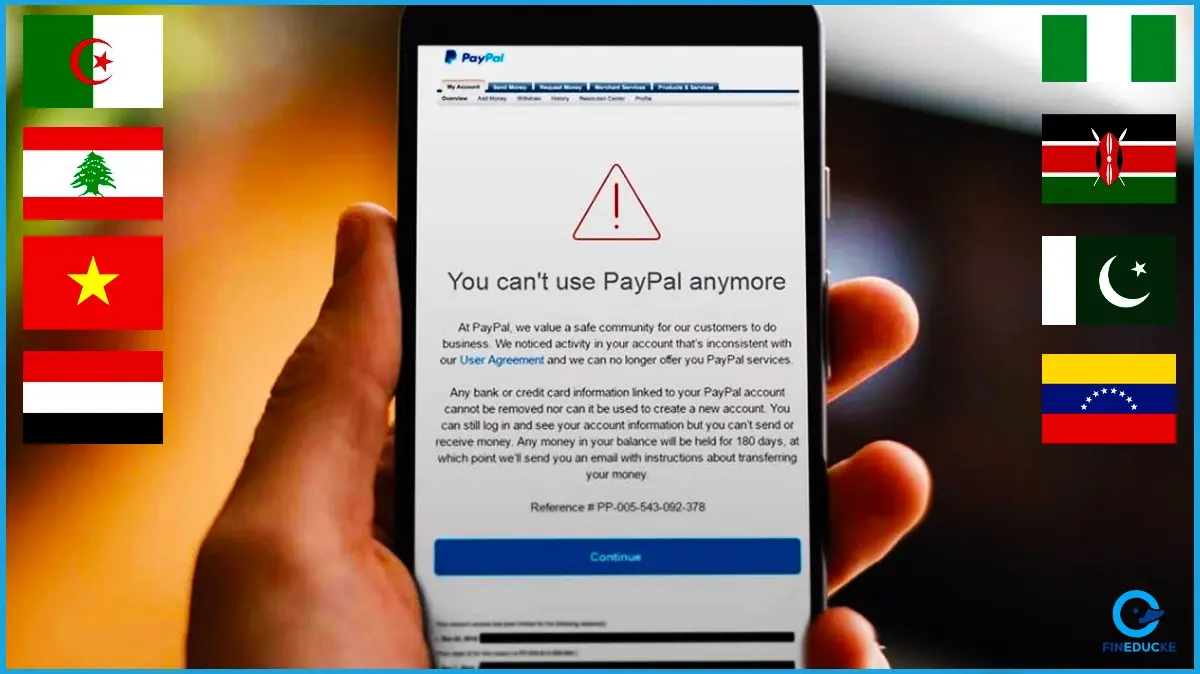
PayPal has frozen and limited accounts of many Kenyans following strict new verification rules imposed after the country’s FATF grey-listing. The users most affected are freelancers, remote workers, and other individuals who depend on the platform to receive international payments.
Many Kenyans have reported that their accounts have been restricted, leaving them unable to send, receive, or withdraw funds. For some, the limitations have come with no clear timeline for resolution, creating uncertainty for workers who rely on PayPal as a primary source of income.
Among those affected is comedian Sheryl Gabriel, who shared on her Instagram account that her PayPal account had been permanently limited with $195 still inside.

In this article, we break down why PayPal is tightening verification for Kenyan users, the documents being requested, why many people are struggling to meet the requirements, and the practical steps you can take if your account has been limited.
What PayPal Is Asking For
Affected Kenyan PayPal users have been asked to submit identity and residency documents including proof of employment and proof of address; bank statements, and utility bills. Those who receive international transfers are also being required to explain the source and purpose of the funds.
Individuals who have been affected by these changes have reported that yes, they can can access their account information including their balance, however, problem is that they cannot send, receive or withdraw their funds, for some their account has been permanently limited.
PayPal has warned that non-compliant accounts held for more than six months risk permanent deactivation, and that even after an account is restored, future payments may be held for up to 21 days. Remaining balances can be withheld for up to 180 days to cover potential chargebacks.
Under PayPal's customer identification process, users are required to scan government-issued identification documents and verify their identity through facial recognition technology.
PayPal does not have offices in Africa and instead operates through partnerships with financial institutions and telcos across the continent.
Why Proof of Address Is a Challenge for Many Kenyans
One of the biggest obstacles facing affected PayPal users is proving their physical address. While PayPal commonly accepts utility bills, bank statements, and other residency documents, many Kenyans do not have these records in their own names.
Unlike countries such as the United States, where homes typically have standardized street addresses and utility accounts are linked directly to residents, many Kenyan households rely on landmarks, shared utility accounts, prepaid services, or landlord-managed bills.
This makes it harder for users to provide the type of documentation international financial platforms expect.
As a result, some legitimate users find themselves unable to satisfy PayPal's verification requirements even when they can clearly prove their identity and source of income.
Read our detailed guide on why proving a physical address remains a major challenge for many Kenyans using international financial platforms.
Why Kenya Was Grey-Listed Again by FATF
This restriction comes after Kenya was again placed on the Financial Action Task Force (FATF) grey list on February 23, 2024.
The first time that Kenya was grey listed was in 2010. The reason for the listing at the time was because the country was very slow when it came to the implementation and enforcement of its original anti-money laundering law.
4 years later, in 2014, Kenya was removed from the grey list after tightening financial regulations, improving the capacity of the Asset Recovery Agency (ARA), and setting up the Financial Reporting Centre (FRC).
After 10 years, the country has been placed again on the grey list. This time, the reason is because FATF found strategic deficiencies in Kenya's anti-money laundering (AML), counter-terrorism financing (CFT), and proliferation financing framework.
In short, Kenya was grey-listed because FATF concluded that the country needed stronger systems to:
- Detect suspicious financial activity
- Track the true owners of companies and trusts
- Regulate high-risk sectors, including crypto businesses
- Investigate and prosecute money laundering and terrorism financing cases
- Enforce international sanctions effectively
Kenya Is Not Alone: Read this article to see Top 10 Countries Where PayPal Has Imposed Stict Restrictions including Nigeria, Pakistan, and Venezuela among others.
What to Do Right Now if Your Paypal has been Limited
If your PayPal account has been restricted, here are concrete steps to take to resolve your issue:
The first action that you should take to restore your PayPal account after limitation is complying with the documentation request promptly. Gather your national ID or passport, recent bank statements, and any employment or contract documents showing your income source.
The sooner you respond, the better your chances of avoiding permanent deactivation.
However, be cautious and very verify everything before submitting, in my experience, Paypal is highly automated meaning that its AI that often verifies these documents, a small mistake might lead to permanent limitation of your account.
To address the physical address challenge facing many Kenyans, use a formal bank statement. Ensure that the bank statement is recent not exceeding three months, this way you will increase your chances of removing the limitation on your PayPal account.
If you don't have a utility bill in your name, a bank statement bearing your name and branch address may be accepted as proof of residence. Some users have also had success with official letters from their employer or landlord on headed paper.
Before submitting bank statement as proof of address, make sure you change your address on PayPal to make sure it aligns with the one on your bank statement.
If the above solutions fail, try contacting PayPal support directly. For the longest time working as a freelancer, I realized that PayPal resolves issues better when you contact them via phone call.
However, if you don’t want to call, log your case through PayPal's Resolution Centre and keep a record of all communications.
If your account has been frozen, formally request clarity on the exact documents needed and the timeline for review. Although the timeline is often provided in the li mitation email.
Escalate through social media if you're stuck. PayPal's support teams have historically been more responsive to public-facing complaints on X (@AskPayPal) than through standard ticket channels.
Alternative Payment Platforms for Kenyan Freelancers
If Paypal continues to become a problem, maybe its time you start considering migrating to alternative payment platforms. Whether or not your account is eventually restored, this situation is a reminder of the risk of relying on a single payment channel. Consider:
- Wise (formerly TransferWise): Widely used by Kenyan freelancers, supports direct bank transfers in multiple currencies
- Payoneer: Popular with remote workers and freelance platforms like Upwork and Fiverr; specifically designed for markets like Kenya
- Direct bank wire (SWIFT): Slower and sometimes costlier, but immune to platform-level account restrictions
- Deel or Remote: If you work with international employers, these platforms handle compliance on your behalf and pay directly to Kenyan bank accounts
Kenya's placement on the FATF grey list has increased scrutiny of financial transactions originating from the country, prompting international payment providers to adopt stricter compliance procedures.
PayPal is not the only platform tightening its grip, cryptocurrency exchanges including Binance and other fintech firms have also faced heightened regulatory pressure operating in Kenya.
For the freelancers and digital workers who depend on these platforms as financial lifelines, the challenge is not just bureaucratic. It reflects a structural gap between global compliance frameworks designed around formal financial systems, and the everyday realities of how money moves in African markets.