Many people start businesses with little to no planning. In the end, the absence of a clear strategy becomes one of the biggest reasons businesses fail. A business plan is a strategic document that outlines your goals, your vision, and the steps needed to turn an idea into a sustainable business.
Starting a business is one of the boldest decisions you can make, especially in a market that is increasingly competitive and fast-moving. Going in without a plan can also become one of the most expensive mistakes.
A business plan forces you to think critically about your idea before investing a single shilling into it. Research shows that entrepreneurs with a completed business plan are 260% more likely to launch their business successfully compared to those without one.
The good news is that your first business plan does not need to be complicated. A simple plan covering your goals, target customers, services, and finances is enough to get started.
To make the process practical and easier to understand, this guide will build a sample plan step by step using Senje Nail Parlour, a fictional nail care business targeting young professionals and students in Nairobi.
How to Create Your First Simple Business Plan

Step 1: Describe Your Business and Its Mission
Start by describing what your business does, who it serves, and why it exists. This is called the company overview, and it anchors everything that follows. Write a mission statement (what you do day-to-day) and a vision statement (where you want to be in three to five years).
Mission: "To deliver affordable, stylish, and professional nail care services to busy professionals and students in Nairobi."
Vision: "To become Nairobi's most trusted and stylish nail parlour within three years."
Keep this section to one short paragraph per statement. Clarity matters more than length here.
Step 2: Identify the Problem and Your Solution
Every business exists because something is not working well enough for a specific group of people. Name that problem clearly, then explain how your business solves it.
Senje Nail Parlour Example:
"Many nail parlours in Nairobi are either too expensive or lack consistency in quality. Senje Nail Parlour will solve this by offering high-quality services at affordable prices, with strict hygiene standards and trained professionals."
If you cannot write this section in two to three sentences, your business idea may need more clarity before you go further.
Step 3: Define Your Target Market
Your target market is the specific group of people most likely to pay for what you offer. Be as precise as possible — "everyone in Nairobi" is not a target market.
Senje Nail Parlour Example:
"Our primary customers are women aged 18 to 35, including students from USIU and PAC University and young professionals in Nairobi's Westlands and Roysambu areas, who want trendy, affordable nail care. Secondary customers include men seeking basic grooming services."
The more specifically you can describe your customer, the more useful every other section of this plan becomes.
Step 4: Analyse the Competition
Understanding who else is serving your target market — and where they fall short — helps you position your business effectively.
Senje Nail Parlour Example:
"Our competitors include Lareine Spa Roysambu and Nails Haven & Spa, which offer similar services but are frequently cited for high prices and inconsistent customer experiences. Senje Nail Parlour will differentiate through affordable pricing, a strict quality standard, and a loyalty programme where customers earn a free service after five visits."
Be honest here. Investors and lenders will know if you have understated your competition.
Step 5: Describe Your Products or Services
List clearly what you are selling and what makes it worth paying for. Include anything that adds value beyond the basic transaction.
Senje Nail Parlour Example:
"We will offer manicures, pedicures, nail extensions, gel polish, nail art, and basic grooming services. Every service includes a free nail repair guarantee for three days after the appointment. We use professional-grade products to ensure lasting results."
Step 6: Plan Your Marketing Strategy
Explain how you will attract your first customers and keep them coming back. Focus on methods that are affordable and realistic for where you are right now.
Senje Nail Parlour Example:
"We will build our presence on Instagram and TikTok by posting before-and-after photos and short videos of our work. We will offer a 20% discount to first-time customers and introduce a loyalty card programme. Word-of-mouth from satisfied customers will be our most powerful long-term channel."
Do not list every possible marketing channel. Choose the two or three you will actually execute and commit to them.
Step 7: Set a Timeline and Success Metrics
A plan without milestones is just a wish list. Define when you intend to open, what you need to hit in your first month, and how you will measure whether things are working.
Senje Nail Parlour Example:
- Timeline: Open by March 2026
- Month One Milestone: Serve at least 50 customers
- Year One Goal: Reach 200 monthly customers
- Monthly Metrics: Track number of customers served, total revenue, and customer retention rate
Review these numbers every month without fail. The discipline of measurement is what separates businesses that survive from those that close within two years.
Step 8: Prepare Your Financial Projections
This is the section most first-time founders rush or skip entirely — and it is the most important one. A lender or investor will go straight here. Even if you are not seeking external funding, you need this section to know whether your business can actually work.
Start with your costs, because they are more predictable than revenue.
Senje Nail Parlour Example — Start-Up Costs:
- Equipment (nail tools, furniture, products): KSh 100,000
- First month's rent: KSh 30,000
- Marketing (signage, social media setup, launch promotion): KSh 15,000
- Total start-up requirement: KSh 145,000
Next, build a simple revenue estimate from the bottom up:
- Average service price: KSh 800 per customer
- Target customers per day: 8
- Working days per month: 22
- Projected monthly revenue: KSh 140,800
Monthly operating costs (rent, supplies, utilities, staff): approximately KSh 70,000
Projected monthly profit after month three: KSh 70,000
Break-even point: You need to serve roughly 88 customers per month (KSh 70,000 operating costs ÷ KSh 800 average spend) to cover your costs. At 8 customers per day, you reach that target within two weeks of operation.
This is basic modelling, but it immediately tells you whether the numbers make sense — before you sign a lease.
Step 9: State Your Funding Needs
If you need external financing, be specific about how much, where it will come from, and exactly what it will be used for.
Senje Nail Parlour Example:
"We require KSh 145,000 to cover start-up costs. We plan to contribute KSh 75,000 from personal savings and seek KSh 70,000 through a SACCO loan."
If you are applying through a SACCO — which is one of the most accessible financing routes for small businesses in Kenya — understand what they will want to see.
Most SACCOs require proof of membership and consistent contributions, a basic description of the business, and financial projections showing how the loan will be repaid.
The plan you are building right now is the document that answers those questions. Other funding options worth researching include the Youth Enterprise Development Fund and the Women Enterprise Fund, both of which offer accessible financing for qualifying Kenyan small businesses.
Step 10: Write the Executive Summary
Write this last. It sounds counterintuitive — it appears first in your final document — but you cannot summarise what you have not yet written.
Once every other section is complete, condense the entire plan into one short paragraph: what you do, who you serve, what makes you different, what you need, and what you expect to achieve.
Senje Nail Parlour Example:
"Senje Nail Parlour will provide affordable, high-quality nail care services to women aged 18 to 35 in Nairobi. Targeting students and young professionals underserved by expensive or inconsistent local competitors, we will differentiate through strict quality standards, a loyalty programme, and a strong social media presence. We require KSh 145,000 in start-up capital and project profitability within three months of opening."
That is your executive summary. One paragraph, every essential point, nothing wasted.
What Kind of Plan Have You Just Written?
The plan you have built here is called a lean business plan — a simple, practical document designed for clarity and speed. It is the right starting point for any new business.
However, if you intend to approach a bank, a SACCO for a larger loan, or a formal investor, you will need to expand it into a traditional business plan — a more detailed document with deeper market research, a competitive analysis framework, and comprehensive financial statements.
Understanding the difference between the two, and knowing when each is appropriate, is the next step in your planning journey. For a full breakdown, read our guide: Traditional vs. Lean Business Plan: How To Choose the Right One for Your Needs.
And once your plan is built, if you want to know exactly which sections a Kenyan investor or lender will scrutinise most closely, read: The Most Important Parts of a Business Plan.
Start This Week
Nairobi's beauty and personal care industry is growing — and it is competitive. The entrepreneurs who succeed in it are not necessarily the ones with the best skills. They are the ones who understand their numbers, know their customers, and show up with a plan. You now have the framework. Use it.
Open a document, work through each step in order, and finish your first draft before the week is out. It does not need to be perfect. It needs to be written.
Qualities of a Good Business Plan
A good business plan should have the timeline, financial requirements, and methodologies necessary for the success of a business entity. Additionally, a business plan might include a mission statement and a comprehensive overview of the products or services offered by the owner of the business or a company.
The duration covered by a business plan can vary based on the business's stage and objectives. However, a good business plan will include the following benchmarks:
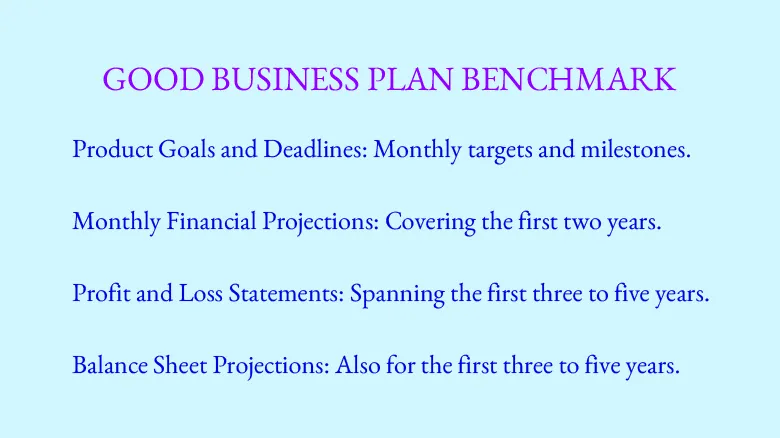
- Product Goals and Deadlines: Monthly targets and milestones.
- Monthly Financial Projections: Covering the first two years.
- Profit and Loss Statements: Spanning the first three to five years.
- Balance Sheet Projections: Also for the first three to five years.
Business plans are essential for startups, entrepreneurs, and small businesses. They serve as a guiding documentation that help in facilitating growth. Larger companies such as Safaricom and CocaCola also create or update business plans to align with their high-level goals, financial objectives, and timelines.
Beyond serving as a structured outline of a business or company’s goals and financial plans, a business plan is also crucial for evaluating the viability and profitability of a business.
It can help determine when the business will become profitable and how much capital is needed from investors to make a business entity a success.
Additionally, the process of creating a business plan is valuable as it holds the company accountable to a timeline and can be a powerful tool to attract potential investors, thereby fostering growth.
Simple vs. Detailed Plans: Which Do You Need?
The level of detail required in your business plan depends on your business's stage and intended audience. For example, corporations typically need a comprehensive plan, potentially extending up to 100 pages. In contrast, small businesses or startups benefit from a more concise plan focusing on financials and strategy.
Choosing the Right Business Plan for Your Needs
To determine the type of business plan that best suits your needs, start by asking, “What do we want the plan to accomplish?” Once you identify its purpose, the form and structure will naturally follow.
Use the Chart Below to Determine the Right Type of Business Plan for Your Needs:
|
Function |
Audience |
Type
of Business Plan |
|
Serve
as a flexible guide for objectives and timelines |
Internal |
Lean |
|
Provide
a detailed, in-depth blueprint of business goals and timelines |
Internal |
Traditional |
|
Act
as a strategic document with a narrative focus on organization-wide goals,
priorities, and vision |
Internal |
Strategic |
|
Secure
a company loan or grant |
External |
Traditional
(with emphasis on financial documents) |
|
Attract
investors or partners |
External |
Traditional/Strategic
(with a focus on financials, as well as supporting departments like
marketing, sales, product development, etc.) |
|
Test
a business or startup idea |
Internal |
Lean |
Does the Order of Your Business Plan Matter?
The structure of your business plan is flexible, except for the executive summary, which should always be at the beginning. Beyond that, organize your plan in a logical, easy-to-follow manner that best communicates your strategy and goals.