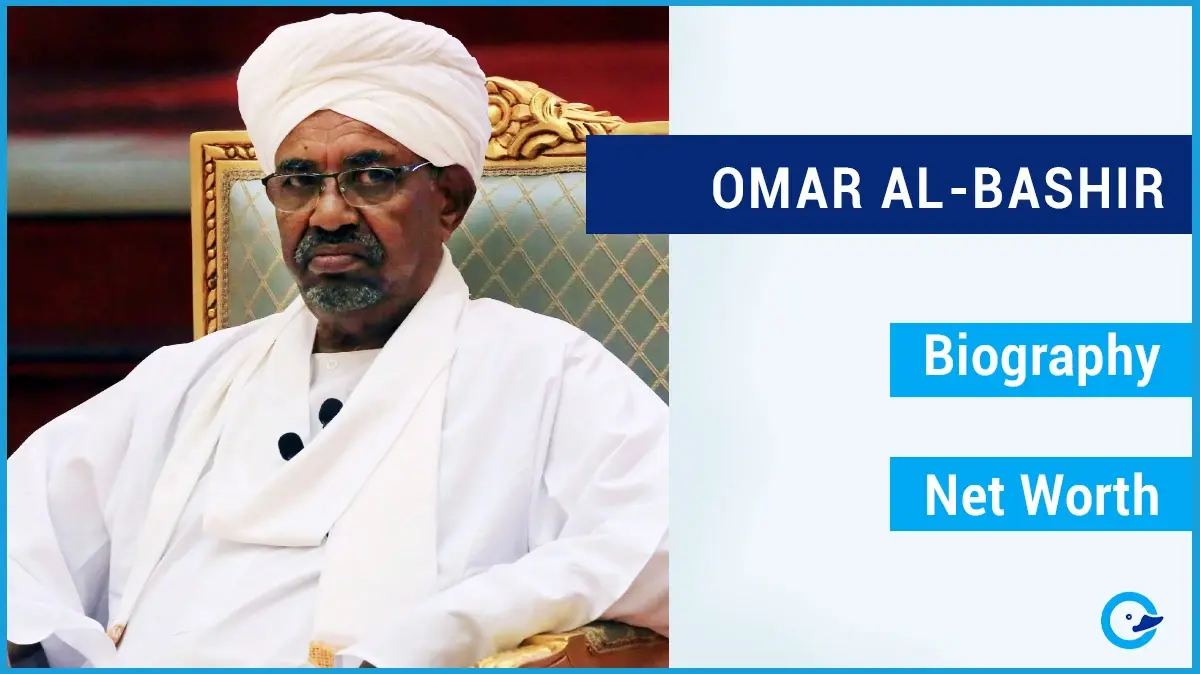
Omar al-Bashir is a Sudanese former military officer and politician with an estimated net worth of $1 billion, though the true extent of his accumulated wealth may be far greater.
A 2009 WikiLeaks cable alleged that al-Bashir had stashed as much as $9 billion in foreign bank accounts — money that ICC Prosecutor Luis Moreno-Ocampo claimed included hundreds of millions in London banks alone.
Al-Bashir and his government denied the figures, and no independent audit has ever been conducted.
He served as head of state of Sudan from 1989 to 2019 — a span of thirty years — making him one of the longest-ruling leaders in African history.
He came to power through a military coup, ruled through a combination of Islamist ideology, ethnic politics, and authoritarian repression, and left office only after being deposed by his own military following mass popular protests.
He has been indicted by the International Criminal Court for genocide, crimes against humanity, and war crimes in Darfur, and as of 2026 has still never faced trial.
Quick Facts
|
Full Name |
Omar Hassan Ahmad al-Bashir |
|
Date of Birth |
January 1, 1944 |
|
Age |
82 |
|
Place of Birth |
Hosh Bannaga, near Shendi, Sudan |
|
Nationality |
Sudanese |
|
Estimated Net Worth |
$1 billion (disputed; WikiLeaks alleged up to $9 billion) |
|
Known For |
President of Sudan (1993–2019); ICC indictee; Darfur genocide |
|
Status |
Deposed; whereabouts uncertain amid Sudan's ongoing civil war |
Early Life
Omar al-Bashir was born on January 1, 1944, in Hosh Bannaga, a small village on the outskirts of Shendi in northern Sudan. He was of African-Arab descent. His mother was Hedieh Mohamed al-Zain; his father, Hassan ibn Ahmed, was a dairy farmer.
His uncle was Al-Taib Mustafa, a journalist and politician who would later become a vocal opponent of South Sudanese secession.
When al-Bashir was entering secondary school, his family relocated to Khartoum North. He became a supporter of Al-Hilal, the prominent Sudanese football club, and went on to pursue a military career.
In 1975, he was posted to the United Arab Emirates as part of a Sudanese military attaché, and upon returning was elevated to garrison commander.
Rise to Power
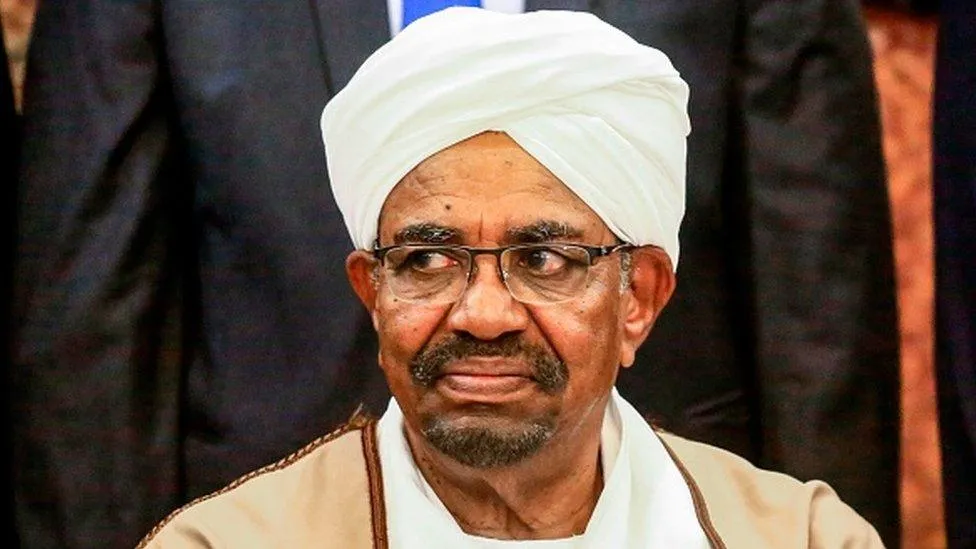
By 1989, Sudan's coalition government under Prime Minister Sadiq al-Mahdi had grown unstable — weakened by a worsening civil war in the south and economic deterioration. On June 30, 1989, al-Bashir led a group of army officers in a bloodless military coup that toppled the government.
After seizing power, al-Bashir moved swiftly to consolidate control. He imposed a form of Islamic military code at the national level, suspended all political parties, dissolved the government, and assumed the roles of chief of state, prime minister, commander of the armed forces, and Minister of Defense simultaneously.
On October 16, 1993, he formally appointed himself President of Sudan as the Revolutionary Command Council was dissolved and Sudan nominally restored to civilian rule. He simultaneously disbanded remaining rival factions.
Time in Office
Early Presidency (1993–2000)
In March 1996, al-Bashir stood for election as president — the only candidate legally permitted to run — and won with over 75% of the vote. Around the same time, the influential Islamist Hassan al-Turabi was elected Speaker of the National Assembly.
Relations between the two men deteriorated, and in December 1999 al-Bashir dissolved Parliament and forced Turabi out in what amounted to an internal palace coup. Al-Bashir was reelected in December 2000 with over 85% of the vote.
The Darfur War and Peace Accord (2003–2010)
In February 2003, rebels from ethnic African communities in Sudan's western Darfur region launched an insurgency against the Khartoum government, complaining of systematic oppression.
Al-Bashir's government responded with a scorched-earth campaign using Sudanese air forces and the notorious Janjaweed militia — Arab fighters on horseback and camelback who swept into villages at dawn, committing mass killings, rape, torture, and forced displacement.
The United States government officially declared the campaign a genocide. The Sudanese government claimed approximately 10,000 deaths; the United Nations estimated that around 300,000 people were killed and 2.7 million were displaced by 2010.
In 2005, al-Bashir's government signed the Comprehensive Peace Agreement with southern rebels, ending over two decades of civil war in the south. The accord set up a transitional arrangement and permitted a new political party — the Sudan People's Liberation Movement (SPLM) — to participate in government.
It also paved the way for a 2011 independence referendum, in which the south voted overwhelmingly to become the independent nation of South Sudan.
Elections and Final Terms (2010–2019)
In 2010, al-Bashir won Sudan's first multi-party election in years. The election was widely criticized by international observers as failing to meet fair election standards — marred by intimidation, irregularities, and inequality.
Despite the criticism, the results stood. Under the peace accord's terms, SPLM leader Salva Kiir was also elected to govern Sudan's semi-autonomous southern region. In April 2015, al-Bashir was reelected again with over 94% of the vote — an election boycotted by most major opposition groups.
Throughout his later terms, the Sudanese economy grew, primarily through oil extraction, but inflation remained chronic and fueled cost-of-living riots and labor unrest. Anti-government demonstrations intensified from late 2018 onward.
Fall from Power
In April 2019, after months of mass protests demanding his resignation, al-Bashir was arrested and deposed by the Sudanese Armed Forces on April 11.
A Transitional Military Council assumed control. Al-Bashir was initially placed under house arrest, and his ministers were arrested. He was transferred to Kober Prison in Khartoum, where he was tried in Sudanese courts.
In December 2019, he was convicted of corruption and money laundering and sentenced to two years in a correctional facility.
In February 2020, Sudan's transitional government announced it had agreed in principle to hand al-Bashir over to the ICC, raising hopes that he would finally face international justice for the Darfur atrocities. That handover has never taken place.
ICC Indictment
In July 2008, ICC Prosecutor Luis Moreno-Ocampo accused al-Bashir of genocide, crimes against humanity, and war crimes in Darfur.
On March 4, 2009, the ICC issued its first arrest warrant for al-Bashir, making him the first sitting head of state ever indicted by the court. A second arrest warrant, adding three counts of genocide, was issued on July 12, 2010.
Despite the warrants, al-Bashir traveled freely for years, visiting countries including China, Saudi Arabia, Russia, and South Africa — all of which declined to arrest him, in violation of their obligations under international law.
The ICC referred multiple instances of non-cooperation to the UN Security Council, which took no further action.
As of 2026, al-Bashir has still not been transferred to The Hague. The ICC's case remains in the pre-trial stage and cannot proceed without his physical presence.
Current Status: Lost in Sudan's Civil War
The situation changed dramatically in April 2023, when war broke out between Sudan's Armed Forces and the paramilitary Rapid Support Forces — the same two factions that had together ousted al-Bashir in 2019.
As fighting engulfed Khartoum, Kober Prison was attacked, and thousands of inmates escaped. Al-Bashir was moved from the prison to the Alia Military Hospital in Omdurman before the worst of the chaos.
He was subsequently transferred to a hospital at Wadi Seidna Air Base, and as of September 2024 was reported to be receiving medical treatment in the northern town of Merowe. He is reported to be suffering from heart problems.
His precise whereabouts and legal status remain uncertain. The ICC has urged Sudan's government to cooperate in securing his arrest.
As of early 2026, outstanding ICC arrest warrants also remain for Ahmad Harun and Abdel Raheem Muhammad Hussein — both former senior officials in al-Bashir's government.
Harun is reported to have left prison and rejoined public life. Justice for Darfur's victims remains effectively stalled.
The WikiLeaks Wealth Allegations
A 2009 WikiLeaks diplomatic cable alleged that al-Bashir had embezzled as much as $9 billion in Sudanese state funds into foreign bank accounts.
Moreno-Ocampo told US officials that disclosing the scale of al-Bashir's alleged theft could shift Sudanese public opinion against him, turning him from a "crusader" into a "thief" in popular perception.
The cable referenced Lloyd's Bank in London as a possible repository, though Lloyd's denied any knowledge of such accounts.
Al-Bashir's government called the claims "ludicrous." No comprehensive accounting of his alleged fortune has ever been verified, and the estimated $1 billion net worth figure cited across financial publications is considered a conservative baseline.
Whether or not the higher estimates are accurate, al-Bashir is frequently mentioned alongside some of the richest people in Sudan, many of whom built fortunes through politics, business, or long-standing influence.
Legacy
Al-Bashir's three-decade rule left Sudan deeply scarred. He presided over two major wars — the Second Sudanese Civil War in the south, and the Darfur genocide in the west.
He looted the country's resources, suppressed political opposition, and left institutions too weak to sustain a democratic transition after his removal. The civil war that erupted in 2023 — between forces that both grew out of the military structures he built — is, in many respects, a direct consequence of the system he designed.
He remains the most prominent ICC fugitive in history, a symbol both of the scale of mass atrocity committed in Darfur and of the persistent limitations of international justice when geopolitics intervene.