Africa's wealthiest individuals continue to build across cement, mining, telecom, fashion, and finance. The 2026 Forbes list brings a few notable shifts.
To start with, Abdulsamad Rabiu has climbed to the third position, Koos Bekker is no longer on the 2026 richest people in Africa, and a new name, Michiel Le Roux, enters at number ten. Here's who made the cut and what their wealth is built on.
Africa's Rich List at a Glance
|
Rank |
Name |
Net Worth |
Country |
Industry |
|
1 |
Aliko Dangote |
$28.5B |
Nigeria |
Manufacturing |
|
2 |
Johann Rupert & family |
$16.1B |
South Africa |
Fashion & Retail |
|
3 |
Abdulsamad Rabiu |
$11.2B |
Nigeria |
Diversified |
|
4 |
Nicky Oppenheimer & family |
$10.6B |
South Africa |
Metals & Mining |
|
5 |
Nassef Sawiris |
$9.6B |
Egypt |
Construction & Engineering |
|
6 |
Mike Adenuga |
$6.5B |
Nigeria |
Diversified |
|
7 |
Naguib Sawiris |
$5.6B |
Egypt |
Telecom |
|
8 |
Patrice Motsepe |
$4.3B |
South Africa |
Metals & Mining |
|
9 |
Mohamed Mansour |
$4B |
Egypt |
Diversified |
|
10 |
Michiel Le Roux |
$3.8B |
South Africa |
Finance & Investments |
1. Aliko Dangote – $28.5 Billion
- Country: Nigeria
- Industry: Manufacturing (Cement, Sugar, Flour)
- Age: 68
- Education: Al-Azhar University, Egypt.

Dangote has held the top spot on Africa and Nigeria's wealth rankings for over a decade, and his lead has grown. Starting out trading commodities after university in 1977, he built Dangote Group into the continent's most recognizable industrial conglomerate, dominant in cement and essential consumer goods.
His net worth is up significantly from last year, driven in large part by his $19 billion oil refinery in Lagos — one of the largest single-train refineries in the world.
If the facility operates at full capacity, it could reduce Nigeria's dependence on imported petroleum products and reshape the country's downstream energy sector. At 68, Dangote is not winding down; he's still in execution mode on the most ambitious project of his career.
Also read: Top 10 Richest Presidents in Africa in 2026
2. Johann Rupert & Family – $16.1 Billion
- Country: South Africa
- Industry: Fashion & Retail (Richemont, Cartier, Montblanc)
- Age: 74
- Education: University of Stellenbosch, dropped out

Rupert is the richest person in South Africa and second richest in Africa after Dangote. He chairs Richemont, the Swiss luxury group behind Cartier, Montblanc, IWC, and other high-end brands. His father built a tobacco empire; Rupert transformed that foundation into a global luxury business.
His net worth has grown alongside continued demand for hard luxury goods. Rupert is also well known for his conservation investments in South Africa, channeling significant resources into nature reserves and wildlife protection. His wealth is old in origin but actively managed and growing.
3. Abdulsamad Rabiu — $11.2 Billion
Country: Nigeria | Industry: Diversified (Cement, Sugar, Real Estate) | Age: 64 Education: Capital University, Ohio

Rabiu is one of the richest people in Nigeria. His jump from sixth to third position is the most significant movement on this year's rich list. Through BUA Group, he competes directly with Dangote in cement and sugar — two sectors with enormous demand across Nigeria and West Africa. He inherited the business from his father at 24 and has spent the decades since scaling it substantially.
BUA Cement's continued expansion and BUA Foods' market gains have driven his wealth upward. Rabiu is also active in philanthropy, particularly in health and education in northern Nigeria, though his public profile remains relatively low compared to the size of his empire.
4. Nicky Oppenheimer & Family — $10.6 Billion
Country: South Africa | Industry: Metals & Mining (De Beers) | Age: 79 Education: Oxford University

The Oppenheimer fortune was built on diamonds. As former chairman of De Beers, Nicky Oppenheimer and his family sold their stake in the company to Anglo American in 2012 for approximately $5.1 billion, and that capital has since been deployed across investments in conservation, sustainable agriculture, and private equity.
Oppenheimer is no longer in the mining business day-to-day but remains one of Africa's wealthiest individuals through diversified private holdings and a portfolio of nature reserves and agricultural ventures across southern Africa.
5. Nassef Sawiris - $9.6 Billion
Country: Egypt | Industry: Construction & Engineering (OCI N.V., Adidas) | Age: 64 Education: University of Chicago

The youngest of the three prominent Sawiris brothers, Nassef runs OCI N.V., a Netherlands-based construction materials and fertilizer company with operations across the Middle East, Europe, and North America. He also holds a board seat at Adidas and has made several high-profile investments in European football.
Sawiris is the least public of his siblings — methodical, globally connected, and operating across multiple continents. His net worth has held steady at $9.6 billion, reflecting a portfolio built more for stability than speculation.
6. Mike Adenuga - $6.5 Billion
Country: Nigeria | Industry: Diversified (Telecoms, Oil) | Age: 71 Education: Northwestern Oklahoma State University

Adenuga sold lace fabric and soft drinks to fund his education in the United States before returning to Nigeria and building a business empire in oil and telecoms. His company Conoil was among the first Nigerian firms to strike oil in commercial quantities.
His bigger play was Globacom, which he launched in 2003 and grew into Nigeria's second-largest telecom operator, serving tens of millions of subscribers. Adenuga is famously media-shy — there are almost no public interviews with him — but his commercial footprint is impossible to miss.
7. Naguib Sawiris — $5.6 Billion
Country: Egypt | Industry: Telecom | Age: 70 Education: ETH Zurich

The older Sawiris brother made his wealth through telecom, building and selling networks across Egypt, the Middle East, and parts of Africa. At one point he held a significant stake in North Korea's mobile network, one of the more unusual moves in African billionaire history.
More recently, he has shifted attention to media, tourism development along Egypt's Red Sea coast, and gold mining investments. He is outspoken politically and has been a vocal commentator on Egyptian economic policy. His net worth is up from $5 billion last year to $5.6 billion.
8. Patrice Motsepe — $4.3 Billion
Country: South Africa | Industry: Metals & Mining (African Rainbow Minerals) | Age: 63 Education: University of Witwatersrand; Harvard Law

Motsepe was the first Black African to appear on the Forbes billionaire list, entering in 2008. He started as a mining lawyer during the final years of apartheid, then began acquiring underperforming mines and turning them around through African Rainbow Minerals (ARM).
He has moved up two places this year, from tenth to eighth, with his net worth climbing from $3 billion to $4.3 billion — a 43% increase. Motsepe also serves as president of the Confederation of African Football (CAF), giving him influence well beyond the mining sector.
9. Mohamed Mansour — $4 Billion
Country: Egypt | Industry: Diversified (Automotive, Energy, Tech) | Age: 77 Education: Auburn University, U.S.
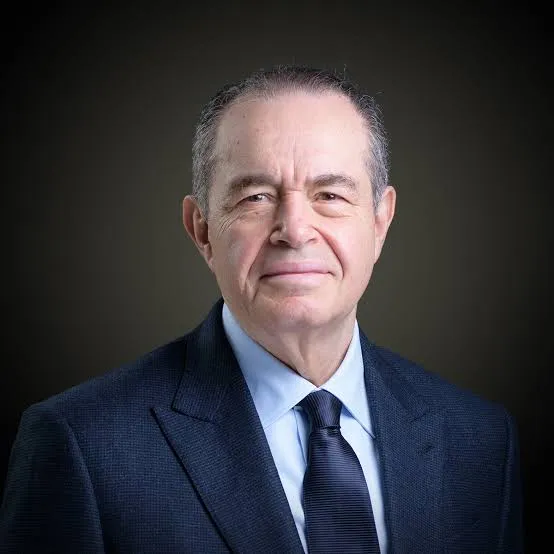
Mansour heads the Mansour Group, one of Egypt's largest conglomerates. The group holds General Motors distribution rights across multiple African countries, runs a McDonald's franchise operation in Egypt, and has interests in energy and technology.
Mansour was educated in the United States and spent part of his career in Egyptian government as Minister of Transport. His empire spans Africa and the Middle East, built on a combination of Western franchise agreements, regional distribution, and private equity holdings.
10. Michiel Le Roux — $3.8 Billion
Country: South Africa | Industry: Finance & Investments | Age: 73 Education: Stellenbosch University

Michiel Le Roux is the new entry on this year's list, replacing Koos Bekker who has dropped out of the top ten. Le Roux is the founder of Capitec Bank, one of South Africa's fastest-growing retail banks. He established Capitec in 2001 with a model focused on low-income and middle-income South Africans who were underserved by traditional banks — offering simplified accounts, transparent fees, and accessible branches.
Capitec has since grown into one of South Africa's largest banks by customer numbers, with over 22 million clients. Le Roux stepped back from day-to-day operations but retains a significant stake. His wealth reflects both the growth of Capitec's share price and the broader expansion of financial services access across South Africa. His entry into the top ten marks a shift — this is the first time a pure-play retail banking founder has appeared on Africa's top ten wealthiest list.
What the 2026 List Tells Us
Nigeria and South Africa still dominate. Seven of ten spots go to these two countries — Nigeria with three (Dangote, Rabiu, Adenuga) and South Africa with four (Rupert, Oppenheimer, Motsepe, Le Roux). Egypt holds three spots with the Sawiris brothers and Mansour.
Rabiu's rise is the headline. Moving from sixth to third in a single year, with his net worth jumping from $5.1 billion to $11.2 billion, BUA Group's expansion in cement and food manufacturing has paid off at scale.
Finance enters the picture. Michiel Le Roux's inclusion is a first — African billionaire wealth has historically been concentrated in resources, manufacturing, and telecoms. A banker making the top ten reflects the growing scale of financial services on the continent.
The industries are still "hard." No tech founders, no crypto, no social media. Africa's top ten are in cement, diamonds, oil, telecoms, luxury retail, and banking. These are sectors tied to infrastructure, population growth, and basic consumer demand — all of which continue to expand across the continent.
The age profile has not changed. The youngest person on the list is Patrice Motsepe at 63. Wealth at this scale in Africa is still the product of decades of compounding — not a quick exit.
Top 10 Richest People in Africa in 2025
|
RANK |
NAME |
NET WORTH |
COUNTRY |
INDUSTRY |
|
1 |
Aliko Dangote |
$23.9 B |
Nigeria |
Manufacturing |
|
2 |
Johann Rupert & family |
$14 B |
South Africa |
Fashion & Retail |
|
3 |
Nicky Oppenheimer & family |
$10.4 B |
South Africa |
Metals & Mining |
|
4 |
Nassef Sawiris |
$9.6 B |
Egypt |
Construction & Engineering |
|
5 |
Mike Adenuga |
$6.8 B |
Nigeria |
Diversified |
|
6 |
Abdulsamad Rabiu |
$5.1 B |
Nigeria |
Diversified |
|
7 |
Naguib Sawiris |
$5 B |
Egypt |
Telecom |
|
8 |
Koos Bekker |
$3.4 B |
South Africa |
Media & Entertainment |
|
8 |
Mohamed Mansour |
$3.4 B |
Egypt |
Diversified |
|
10 |
Patrice Motsepe |
$3 B |
South Africa |
Metals & Mining |
Final Note
The 2026 list is a more accurate picture than the one from a year ago, with Forbes figures replacing earlier estimates. The core story remains the same: Africa's wealthiest individuals built their fortunes through manufacturing, resources, and scale — not overnight. What shifts year to year is the order, the magnitude, and occasionally, who makes the cut at all.