




















In the early hours of March 14, 2026, Raphael Tuju's property was raided by a group of armed police officers and he was forcibly evicted. Credible sources reported that more than 50 police officers, including members of a specialized unit, arrived before dawn and moved into the Dari Business Park. This development belongs former Cabinet Secretary Raphael Tuju.
At the time, the Staff were ordered out, operations were halted, and within minutes Tuju was recording a video that quickly spread across social media. In the footage, the veteran politician accused authorities of abandoning the rule of law, declaring that Kenya was now operating under the “law of the jungle.”
For many Kenyans watching the clip online, the question was immediate, why were police raiding the property of a former cabinet minister at 3 a.m.?
The answer lies in a complicated financial dispute involving a Sh943 million loan from the East African Development Bank, a case that has slowly escalated through courts for more than a decade.
The origins of the current dispute trace back to 2015, when a company linked to former Cabinet Secretary Raphael Tuju secured a major development loan to finance a high-end real estate project in Nairobi.
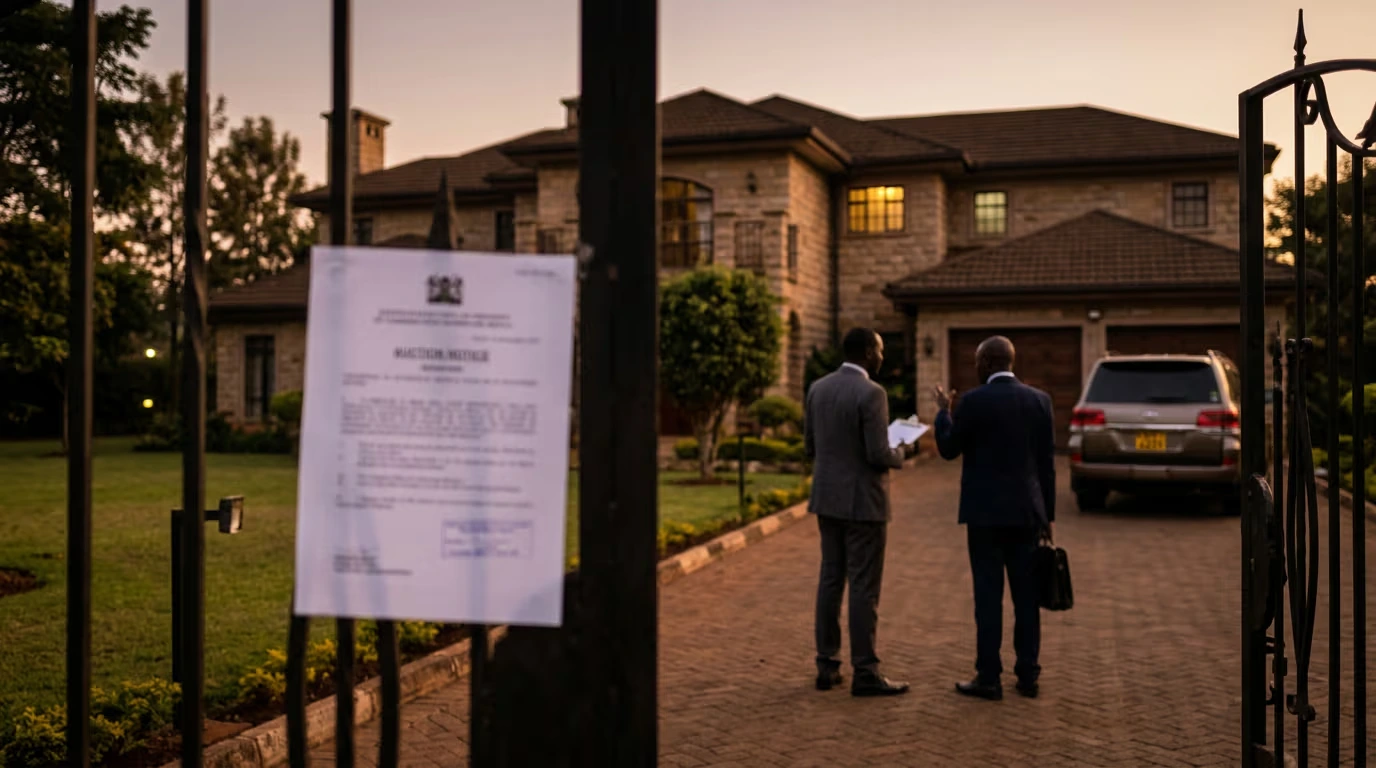
Tuju’s company, Dari Limited, obtained a facility of Sh943.9 million from the East African Development Bank. The loan was intended to fund the acquisition and development of a 20-acre property in Karen, one of Nairobi’s most exclusive suburbs. The land itself served as the primary collateral for the facility.
The project was designed as an upscale mixed-use development. Plans included the construction of 12 luxury two-storey bungalows, each projected to sell for about Sh100 million. Alongside the residential units, the development also envisioned the Entim Sidai Wellness Sanctuary, a hospitality and wellness destination, as well as the Dari Business Park, which would host commercial activities.
Like many large property developments, the financing arrangement included a 24-month grace period. This moratorium allowed the developers time to complete construction and begin selling the properties before repayments of the principal and interest began.
However, by the time the grace period ended in 2017, the project had not progressed as expected. Construction delays and financial challenges meant the anticipated sales had not materialized.
As a result, the loan repayments did not begin on schedule. In 2018, the East African Development Bank formally declared the loan in default, setting off a legal and financial dispute that would stretch across multiple courts and eventually grow into a multi-billion shilling conflict.
One of the most common questions surrounding the dispute is how a loan of Sh943.9 million eventually turned into a claim of more than Sh2.2 billion.
According to the East African Development Bank, the increase is largely the result of accumulated interest, contractual penalties, and legal costs that built up over several years after the loan went into default. Like many commercial lending agreements, the facility included provisions that allowed interest to continue compounding once repayments stopped. As the dispute moved through courts in both the United Kingdom and Kenya, additional expenses related to legal proceedings also contributed to the rising figure.
From the lender’s perspective, the debt simply reflects the normal financial consequences of a borrower failing to meet repayment obligations over a prolonged period.
However, Raphael Tuju strongly disputes this characterization. He has argued that the bank’s calculations are inaccurate and that the lender played a role in frustrating the completion of the Karen development project. Tuju maintains that delays linked to the lender’s actions made it difficult for the project to generate the expected revenue needed to service the loan.
These competing claims have formed the foundation of the legal battle that has now stretched for nearly a decade.
A detail that surprised many observers is that the legal dispute did not begin in Kenya. Instead, the case was first heard in the United Kingdom. This happened because the original loan agreement between Dari Limited and the East African Development Bank included a clause stating that any disputes would be governed by English law and handled through courts in England.
Following the loan default, the bank filed a case in the High Court of Justice in London in 2018 against the company linked to Raphael Tuju. After reviewing the matter, the UK court issued a summary judgment in June 2019 in favor of the lender, effectively confirming that the debt was valid and recoverable.
However, because the assets connected to the dispute were located in Kenya, the ruling could not be enforced automatically. The bank therefore applied to have the judgment recognized by Kenyan courts under the country’s laws governing the enforcement of foreign judgments.
In January 2020, the Kenyan High Court approved the request, meaning the London ruling was formally registered as a Kenyan court decree. This step was crucial because it allowed the bank to pursue recovery of the debt through Kenya’s legal system, including enforcement against the Karen property used as collateral.
Once the London judgment was recognized in Kenya in 2020, the dispute entered a long phase of litigation within the Kenyan judicial system. From that point forward, the courts became the main arena where the conflict between the lender and the company linked to Raphael Tuju played out.
The first major step occurred when the Kenyan High Court formally registered the foreign judgment, making it enforceable locally. This meant the lender could legally pursue recovery of the debt through Kenyan processes, including actions against the property used as collateral.
Tuju and his company responded by launching a series of appeals aimed at challenging both the recognition of the foreign judgment and the enforcement process. However, these efforts faced significant setbacks. In April 2023, the Court of Appeal dismissed one of the key appeals, with the judges indicating that the arguments presented were largely procedural and did not invalidate the original loan obligations.
The dispute eventually reached the Supreme Court of Kenya, the country’s highest judicial authority. Tuju attempted to introduce new evidence that he argued would demonstrate irregularities in the loan process and alleged misconduct by the lender.
The Supreme Court, however, declined to reopen the matter. In its ruling, the judges stated that the claims presented were not sufficiently supported by evidence, describing them as largely unsubstantiated allegations.
By this point, the case had moved through nearly every level of the judicial hierarchy, reinforcing the perception that the courts had repeatedly upheld the lender’s position.
As the legal dispute intensified, Raphael Tuju gradually stepped back from some of the most prominent political roles he had held for years. These resignations marked a noticeable shift in his public career, which had long placed him at the center of Kenya’s political landscape.
In August 2025, Tuju resigned as Secretary-General of the Jubilee Party, a position he had occupied since 2019. At the time, he indicated that the decision would allow him to concentrate on personal matters and create space for new leadership within the party as it reorganized ahead of the next political cycle.
A few months later, another major transition followed. In February 2026, Tuju also stepped down from his role as Executive Director of the Azimio la Umoja–One Kenya Coalition, where he had been responsible for coordinating operations within the opposition coalition.
While the leadership changes were presented publicly as part of broader political restructuring, they also coincided with the escalating legal pressure surrounding the debt dispute. By leaving these positions, Tuju effectively reduced his direct involvement in day-to-day political operations, allowing him to focus more fully on the complex court battles and enforcement actions linked to the Karen property.
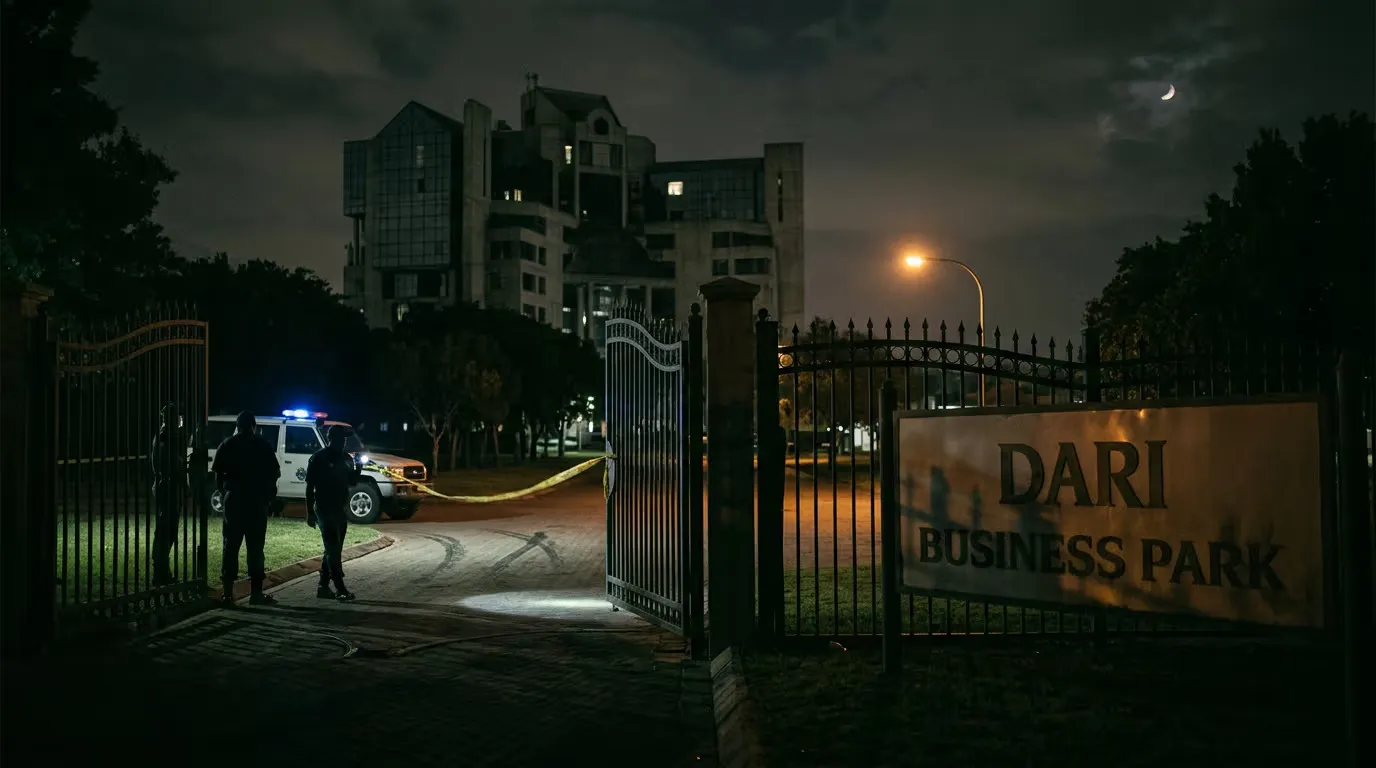
The dispute took a dramatic turn in the early hours of March 14, 2026, when a large contingent of police officers descended on the Karen property linked to Raphael Tuju. According to accounts from the scene, the operation began at around 3 a.m., when more than 50 officers arrived at the Dari Business Park in several vehicles, some of them unmarked.
The officers included members of a specialized police formation often referred to as the Rapid Response Unit. Shortly after arriving, they reportedly cleared the premises and ordered workers and staff to leave, effectively shutting down operations at the property. The development houses several facilities, including commercial spaces and the Entim Sidai Wellness Sanctuary.
As the events unfolded, Tuju recorded a video from the scene that quickly spread across social media. In the footage, he accused authorities of violating the rule of law and described the operation as an example of what he called the “law of the jungle.” The clip drew widespread public attention and triggered debate about why such a large police operation had been deployed in what was essentially a civil debt dispute.
Adding to the confusion was the timing. Just two days earlier, a court had granted Tuju and his company leave to appeal a ruling that allowed the auction of the Karen property. His legal team argued that this temporary reprieve should have halted any enforcement action until the appeal was heard, raising questions about whether the raid had occurred while the legal process was still unfolding.
Amid the escalating enforcement actions, Raphael Tuju has publicly argued that the dispute is not simply a commercial debt recovery case. Instead, he claims that powerful figures within government are interested in acquiring the prime Karen property and are using the financial dispute as a pretext to force him out.
According to Tuju, the land and developments at Dari Business Park are worth significantly more than the outstanding loan, which he argues makes the aggressive enforcement efforts questionable. He has suggested that his refusal to sell the property to politically connected individuals may have contributed to the pressure now being exerted through lenders and enforcement agencies.
Tuju has also raised concerns about the role of state institutions in the dispute. In particular, he questioned why police units were involved in what is essentially a civil commercial matter, arguing that debt enforcement should normally proceed through court-supervised processes rather than security operations.
In addition to these claims, Tuju wrote a public letter to Martha Koome, the Chief Justice of Kenya, in which he criticized aspects of how the judiciary handled related legal proceedings. In the letter, he questioned the impartiality of some judicial decisions and argued that certain remarks made in court rulings undermined public confidence in judicial neutrality.
While the dispute centers on the financial dealings of Raphael Tuju, the case has broader implications that extend beyond one individual. At its core, the conflict raises important questions about property rights, debt enforcement, and the intersection of law and politics in Kenya.
One key issue is how financial institutions recover loans when borrowers default. Lenders argue that enforcing collateral through courts is necessary to maintain confidence in the financial system. If debts cannot be recovered, banks and development institutions may become more cautious in financing large projects, especially in high-risk sectors such as luxury real estate.
At the same time, critics of the enforcement process have raised concerns about the role of state institutions, particularly when police appear to be involved in actions linked to private commercial disputes. Such situations can fuel public debate about whether political influence or powerful interests can shape how business conflicts are resolved.
The case also highlights the financial risks of large property developments. High-value projects often rely on substantial borrowing, and delays or market shifts can quickly turn ambitious investments into prolonged legal battles. In that sense, the Tuju dispute has become a visible example of the challenges facing high-leverage real estate ventures in Nairobi.
As of March 2026, the legal and political drama surrounding Raphael Tuju remains unresolved. The next key moment in the dispute is an upcoming court session expected to determine whether the enforcement actions against the Karen property will proceed or be temporarily halted while appeals are considered.
If the courts allow the process to continue, the auction of the Karen property could move forward, potentially bringing an end to a dispute that has stretched across international and Kenyan courts for nearly a decade. If the appeal succeeds, however, the legal battle may continue for even longer.
Beyond the immediate outcome, the case may leave a lasting mark on how Kenya handles complex commercial disputes. The final resolution could shape future precedents on foreign judgments, debt recovery, and the limits of enforcement in civil matters, making the Tuju saga one that many legal and political observers will continue to watch closely.
The Fineducke Team is a group of passionate writers, researchers, & finance enthusiasts dedicated to helping the youth make smarter money decisions. From saving tips, investment ideas to digital income guides, our team works together to bring you easy-to-understand, practical content tailored for everyday life believing financial education should be simple & relatable.



























Leave a Comment:
Please log in to leave a comment.
Comments:
No comments yet. Be the first to comment!