
















The AI era we've all been fearing is here, in 2025, it has already started taking Jobs and Google is taking the lead.
As of today, Google is already paying it's employees to quit.
And not just any employees. People working in search, advertising, commerce, and engineering. Remember, these fields are at the core of what made Google a tech giant in the first place.
That’s not a rumor. It’s happening.
According to a statement shared with Investopedia, Google confirmed it's rolling out a voluntary exit program, primarily a buyout offer for U.S.-based staff across several divisions. That includes some of the most strategic parts of the company. People are being asked, politely, to leave with a severance package.
“Earlier this year, some of our teams introduced a voluntary exit program with severance for U.S.-based Googlers, and several more are now offering the program to support our important work ahead,” said Google spokesperson Courtenay Mencini.
You know what that means? It’s not just a reorg. It’s not just another round of layoffs. It’s a signal that the work ahead is changing. That Google is reshaping itself, fast. And AI is at the center of that transformation.
Your next read: 9 AI skills that matter in 2025. This article breaks down the most important skills that everyone must have to be among winners in the next economy which will be heavily dominated by AI.
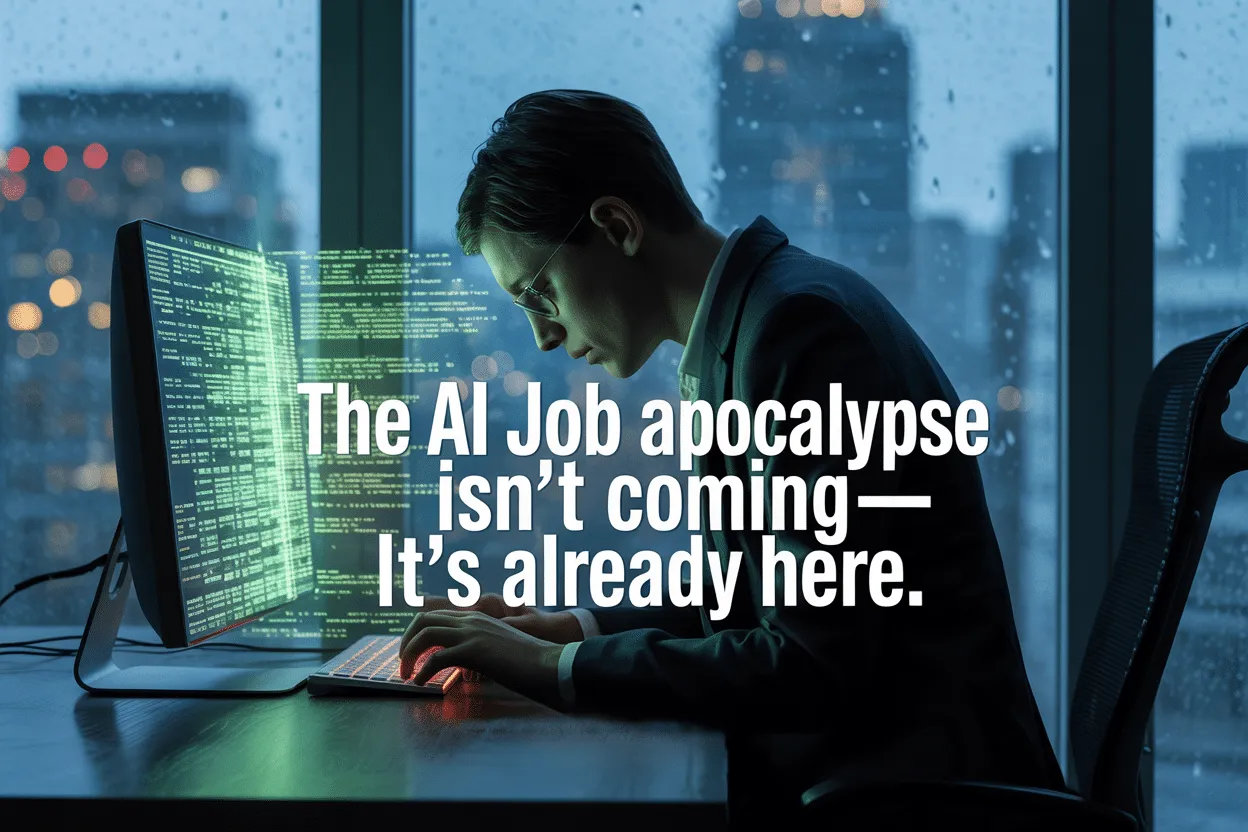
This isn’t science fiction anymore. It's not “someday, AI might take jobs.” That’s over. We’re now in real time watching some of the most stable, coveted roles in tech get quietly replaced or restructured.
And companies aren’t always slashing jobs loudly. Sometimes, like Google is doing now, they’re offering a softer exit. A quieter way to make room for something else. Spoiler: that something else is AI.
This buyout offer is part of a bigger pattern. In early 2023, Google cut about 12,000 employees, roughly 6% of its workforce. More rounds came in 2024. Now in 2025, it’s clear the strategy has shifted: reduce headcount while avoiding headlines. Let AI do more. Ask people to step aside.
Meanwhile, Alphabet’s stock is doing its dance, up 1% after the announcement, still down overall for the year. Investors aren’t panicking. Why? Because they see this as streamlining. As future-proofing. As smart business.
But if you’re a worker inside this system, that hits different.
Even Google Engineers Aren’t Safe
Let that sink in. Engineers. At Google.
For the longest time, we’ve thought of coding, data science, and anything “tech” as safe. As future-proof. As the career path to beat automation.
And while those jobs won’t vanish overnight, they are changing. Google’s engineering teams aren’t immune and neither are any of us working in roles that used to be untouchable.
Think about it: search is now increasingly run by AI summaries. Ads are being optimized using machine learning models that don’t need as many human hands. AI tools like Gemini and Codey can write and test code. What used to take a team might soon take a prompt.
It doesn’t mean there’s no future for tech workers. But it does mean the future looks different; leaner, faster, and powered by a new kind of skillset.
And Then OpenAI Said the Quiet Part Out Loud
Just in case you thought this shift was temporary, here’s a quote that’ll make you sit up a little straighter.
Last week, OpenAI co-founder Ilya Sutskever told a graduating class at the University of Toronto that “the day will come when AI will do all the things that we can.” All of them. Not some. All.
His logic? Simple and chilling: “We have a brain, the brain is a biological computer, so why can't a digital brain do the same things?”
Now, to be fair, he admitted AI still has plenty of gaps. It's not fully there yet. But he’s confident it’s only a matter of time. And coming from someone who helped build ChatGPT, that’s not hype. That’s a heads-up.
It’s one thing when the media speculates. It’s another when the people building the tools say this out loud at a graduation ceremony.
If this is happening at Google, it’s only a matter of time before it trickles into other industries.
Marketing is already being reshaped by AI-generated content. Customer service is shifting toward bots. Legal research, journalism, education — name a field, and you’ll find AI creeping in.
So here’s the truth: none of us can afford to stay still.
But this isn’t a doomsday post. It’s a wake-up call. And a roadmap.
If your job is something AI can do, the best thing you can do is start using those tools yourself.
Learn the prompts.
Use AI to streamline your workflow.
Become the person who knows how to lead with technology, not hide from it.
Because the person who knows how to use AI will replace the person who refuses to.
AI is powerful, but it’s not everything.
AI can’t replicate:
Double down on these strengths. Be the person who connects the dots, not just someone who inputs data.
Whether you're in design, coding, writing, marketing, or coaching — start showing your work.
People don’t just hire based on resumes anymore. They look at what you’re doing, how you think, how you adapt.
The worst thing you can do right now is get comfortable. The second-worst thing? Panic.
The best move: keep learning. Pick up a new skill. Learn a new tool. Take one online course a month, even if it’s just for curiosity. You don’t need to master everything. You just need to stay in motion.
Don’t try to figure this out alone. The people who are thriving right now are the ones sharing what they learn, asking questions, experimenting together.
Find a Discord, a Slack group, a newsletter, a local meetup — somewhere that reminds you, you’re not alone in this shift.
Google offering buyouts isn’t just a quirky corporate move. It’s a signal. The future of work is arriving faster than most people expected.
And the people who thrive in this AI era? They won’t be the ones with the fanciest job titles. They’ll be the ones who saw the shift, leaned into it, and chose to evolve.
So yes — the AI era is here. But that doesn’t have to be bad news.
Not if you’re ready.
The Fineducke Team is a group of passionate writers, researchers, & finance enthusiasts dedicated to helping the youth make smarter money decisions. From saving tips, investment ideas to digital income guides, our team works together to bring you easy-to-understand, practical content tailored for everyday life believing financial education should be simple & relatable.




























Leave a Comment:
Please log in to leave a comment.
Comments:
No comments yet. Be the first to comment!