
















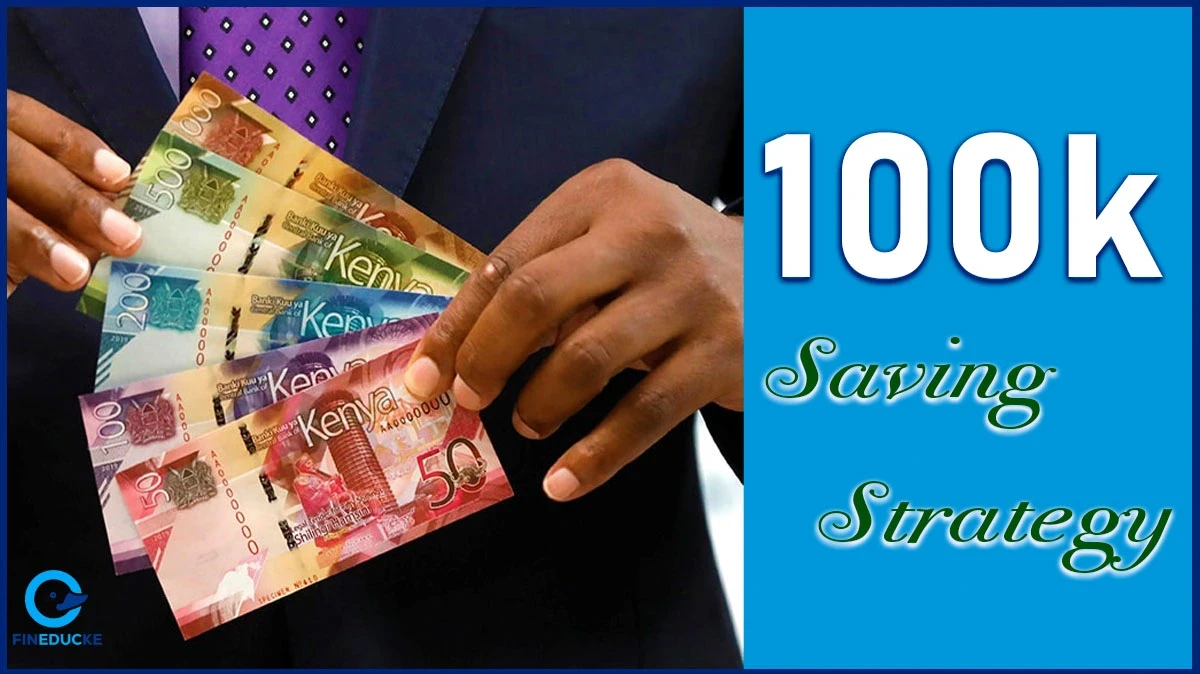
Saving Ksh. 100,000 can sound like a big dream, especially when life is throwing bills, inflation, and emergencies your way. Rent is due, food prices keep climbing, and sometimes you wonder how people even manage to save in this economy.
One thing that many people don’t know is that you don’t need a big salary to build a strong savings habit. What you need is a clear plan, consistency, and discipline.
This guide breaks down practical steps that make saving easier and more realistic, even if your income is not much. By the end of this article, you’ll become a modern saver and get to see how small, steady actions can help you reach that Ksh. 100,000 goal without feeling like you’re suffering.
Before you start saving, ask yourself why you want to do it. Is it to create an emergency fund, pay off debt, start a small business, or you are saving for that vacation you’ve been dreaming about?
Having a reason is important because it gives your savings purpose. Without that purpose, you’ll feel like you’re just punishing yourself by not spending.
So, this is what you should do. Write down your savings plan somewhere visible. This can be in your phone notes or on your vision board. When the temptation to spend hits, remind yourself of your “why.” Trust me, this will make the whole process easier to stick with.
Also read: The 365-Day Financial Sacrifice That Can Completely Transform Your Life
The reason as to why you might be feeling like saving 100k is impossible is because of having an unrealistic perception. Instead of thinking about saving Ksh. 100,000 all at once, break it down into smaller, realistic targets.
This concept also applies when you want save 1 million or even 10 million within a stipulated timeline of your choosing. When you look at it this way, saving stops feeling impossible. It becomes something you can actually plan for.
Hitting small milestones gives you motivation and helps you stay consistent. For us to be proactive, we need to feel motivated, so the joy that comes with you achieving the daily or weekly milestone is what you need to be able to achieve your goal.
If you want to see how this same idea works on a bigger scale, here is a simple guide on how to turn Ksh 10,000 into a million over time.
Keeping all your money in one account is a bad idea because it makes it too easy to spend without noticing. What you ought to do is open a separate savings account or use a locked savings feature on M-Pesa, KCB, or Equity.
This separation helps your savings grow quietly in the background. You’ll be less tempted to withdraw it for impulse spending. If possible, choose an account that earns interest, even if it’s small. The goal is to make saving automatic and not emotional.
Have you ever been in a position where you are making money but you don’t know how you end up spending all of it.
If you have been in such a situation, then its time to start tracking your expenses. For at least one month, write down every expense from rent and matatu fares to those Ksh. 200 takeouts and random data bundles. In short, track everything.
This is very important because by the end of the month, you’ll see where your money actually goes. Most people are surprised by how much leaks through small habits. Once you see the pattern, you can easily adjust and redirect that money toward your savings goal.
A simple budgeting method that works for many people is the 50/30/20 rule:
If you can, flip the numbers to save faster. For example, spend 20% on wants and 30% on savings. Then that will help you save faster. Remember, the idea here isn’t to make your life miserable but to give your money structure.
Pick one week each month where you only spend on essentials, things like food, transport, and bills. No takeouts, no impulse buys, no extra shopping or entertainment. Remember, its not a punishment, it’s a goal we want to achieve here.
This challenge teaches you discipline and helps you realize how much you can live without. You’ll probably end that week with more cash than you expected and that’s money you can send straight to your savings.
Look through your M-Pesa statement or bank transactions. There are high chances that you will find automatic payments, subscriptions, or services you barely use.
I just realized that im always deducted for netflix and showmax subscriptions, I used to watch them during holidays but i rarely watch nowadays. So if you find yourself having such subscriptions, its better to scrap them off or remain with one, the one you are sure that its very necessary.
Keep in mind that as much as we are trying to chase financial freedom, we have to apply holistic financial approach. By doing this, we will be able to achieve our financial goals and also live a healthy and happy life. one that you dont feel drained.
Cancel or downgrade what you don’t need. Those small Ksh. 300 or Ksh. 1,000 deductions add up over time. You can save several thousand a month just by trimming quiet costs.
When budgeting for a financial goal, its imperative to be realistic. It will be hard to save Ksh. 100k in 3 months if you earn less than 30k shillings in a month, however, this isnt to imply that its impossible. there are always alternatives.
If your budget feels squeezed already, the next move to achieve your savings goal is to find a way earn more. But how do you earn more when you already have a job?
One of the best ways is finding a side hustles that fits well in your scheducle. Side hustles aren’t just trendy making money schemes, actually, they’re one of the best ways to build financial freedom.
You could freelance online, bake and sell snacks, tutor students, or sell thrifted clothes. Even an extra Ksh. 5,000–10,000 a month from a small gig can push you closer to your Ksh. 100,000 target without changing your main job.
The best savers in todays society don’t rely on willpower, they rely on systems. Set up an automatic transfer from your main account or M-Pesa to your savings account every time you get paid.
You can even use standing orders or digital saving tools like M-Shwari Lock Savings, Sacco deductions, or digital investment apps. When saving becomes automatic, you don’t have to “feel ready,” trust me, it just happens.
Saving shouldn’t feel like punishment. Make it fun. Use a visual tracker, a notebook, or even jars where you label amounts like “Ksh. 10,000,” “Ksh. 50,000,” and “Ksh. 100,000.” Each time you hit a milestone, celebrate it by acknowledging your progress and not by spending.
You can also try saving challenges like the envelope method or the round-up method, where every time you spend, you round up and save the balance. It’s a simple way to stay engaged.
Once you start earning more or saving well, don’t rush to upgrade your lifestyle. That’s lifestyle inflation; your expenses growing as fast as your income.
Keep your current lifestyle and channel any extra money into your savings or investments. For example, if you get a raise or bonus, pretend it never happened and save the full amount.
Reaching Ksh. 100,000 is a huge milestone, but it’s not the finish line. Use that money wisely. With that amount of money, you can build your emergency fund, invest in a Sacco, buy a money market fund, or start a small project that earns income.
Saving isn’t just about hitting a number, it’s about building habits that keep your finances strong for life.
Saving Ksh. 100,000 isn’t about luck or having a big salary, it’s about consistency and smart choices. Every time you skip an unnecessary purchase, track your expenses, or stick to your budget, you’re building something powerful and moving closer to achieving financial freedom.
Take note, it’s not the amount that changes your life, it’s the discipline behind it. So start small, stay consistent, and remember, the goal isn’t to save perfectly, it’s to save intentionally.
I’m Clinton Wamalwa Wanjala, a financial writer and certified financial consultant passionate about empowering the youth with practical financial knowledge. As the founder of Fineducke.com, I provide accessible guidance on personal finance, entrepreneurship, and investment opportunities.




























Insightful, thank you for sharing. I'll try this