



















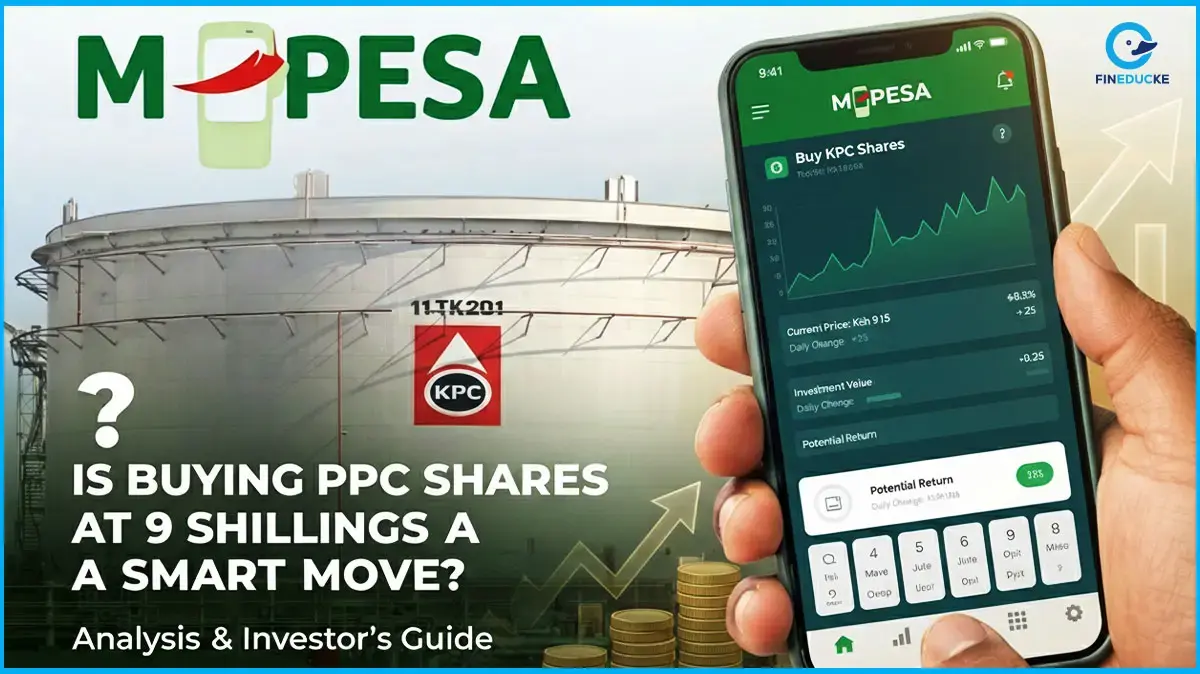
Lately, I’ve been getting the same question over and over.
Should I invest in the Kenya Pipeline Company IPO?
The truth of the matter is that this question does not have a simple yes or no answer. The answer as to whether buying the KPC shares is a smart move requires some explaining.
Remember, investing isn’t about copying decisions but rather understanding how those decisions are made. So in this post, I’ll walk you through the analysis step by step, and you can decide for yourself whether this IPO makes sense for you or not.
Let’s start from the basics.
IPO stands for Initial Public Offering. It simply means shares of a company are being offered to the public.
In this case, Kenya Pipeline Company is listing through an offer for sale. That means the Government of Kenya is selling part of its ownership to the public. You are not funding a startup or a new project. You are buying into an existing, operating business.
When you invest, you become a part owner of that business.
The IPO price is KSh 9 per share.
To make that real:
That’s before commissions and fees.
Before asking whether 9 shillings is cheap or expensive, we first need to understand what kind of business KPC actually is.
Kenya Pipeline Company is a midstream infrastructure company. It transports and stores petroleum products and earns fees for providing that service.
This is not a fast-growth company. It’s a stability and infrastructure business.
That brings us to an important concept called a moat.
A moat is a company’s long-term competitive advantage that protects its profits from competitors. The term was popularized by Warren Buffett, who says great businesses are like castles surrounded by moats.
In KPC’s case, the moat comes from extremely expensive pipeline infrastructure, regulation, and national strategic importance. You can’t just wake up one morning and build a competing pipeline network. That barrier protects the business.
Once we understand the business and its moat, the next question becomes unavoidable.
This is where valuation ratios come in, and also where most of the confusion starts.
You may have heard someone say, “This investment will take 22 years to recover your money.”
That statement comes from the PE ratio.
PE means price per share divided by earnings per share. If a company has a PE of about 22, some people interpret that as paying 22 years of earnings.
But PE is not a payback clock.
It assumes profits never grow, no dividends are paid, no reinvestment happens, and nothing changes. Using PE alone to say “22 years” is an oversimplification. It’s not entirely wrong, but it’s incomplete.
That said, critics do have a point.
KPC is a utility. It transports fuel, it’s a monopoly, and prices are regulated.
Utilities are usually boring, stable, slow-growth companies. Investors typically pay a PE of about 10 to 15 for such businesses.
KPC is not a tech startup. A PE of 22 makes sense for a high-growth company like Safaricom in its early days, when earnings could double every few years.
By pricing KPC at a PE of about 22, the government is valuing it like a high-growth company. Critics are essentially saying, this is a pipeline, not a software company. Why should I wait 22 years for my payback?
That’s one side of the argument.
The opposing view is that KPC is not stagnant.
There are three things expected to shorten that payback period.
First is regional growth. KPC does not only serve Kenya. It is a gateway to Uganda, Rwanda, and the DRC. If fuel demand in those countries grows, throughput increases, earnings rise, and that 22 years could shrink to maybe 10 or 12 years.
Second is fiber optic revenue. KPC leases its fiber optic cable that runs along the pipeline to ISPs. This is a newer, faster-growing income stream.
Third is dividends. The prospectus suggests a dividend of roughly KSh 0.35 per share, which translates to a dividend yield of about 3.9 percent.
That yield is lower than government bonds paying 15 percent or more. The expectation is that share price growth over time would compensate through capital gains.
A useful way to think about KPC is by comparing it with other companies in the same space.
Kenya Power trades at a very low price-to-book value, around 0.26, but carries heavy debt and high liabilities.
KenGen has massive assets but also low payback projects and heavy capital expenditure requirements.
Kenya Pipeline stands out with a cleaner balance sheet, low leverage, and predictable throughput revenues.
Same sector, very different businesses.
Markets don’t reward assets. Markets reward the quality of cash flows.
This is where another ratio helps, the EV to EBITDA ratio.
Enterprise Value asks, what does it cost to buy the entire business, including shares, debt, and cash. EBITDA tells us how strong the operating engine is before financing and accounting effects.
Put together, EV to EBITDA asks a simple question. How expensive is this business relative to the cash it generates?
Based on the prospectus, KPC has an implied EV to EBITDA ratio of about 8.1 times.
That means you’re paying roughly 8 times operating cash flows, not 22. This is why serious analysis never relies on PE alone.
Safaricom’s IPO was massively hyped and oversubscribed by 360 percent. What followed was painful. For years, the stock underperformed and many investors felt burned.
It took about five years for Safaricom to truly take off.
The people who benefited were not the excited ones. They were the patient ones.
IPOs reward discipline and patience, not excitement.
If you want a long-term infrastructure-style holding, steady and moderate returns, and you’re comfortable waiting, investing can make sense.
If you buy, you are betting that KPC will grow profits meaningfully over the next five years, through regional expansion or efficiency gains.
If profits remain flat and the company just pumps the same volume every year, then paying 9 shillings at a PE of 22 is expensive, and it really could take decades to recover your cash.
If you’re looking for quick price jumps, excitement, or guaranteed income, it’s okay to wait or pass.
If you do decide that buying Kenya Pipeline shares fits your goals and risk tolerance, the next step is understanding the actual application process. I’ve put together a simple, step-by-step guide on how to buy Kenya Pipeline shares, including the application options and key dates to keep in mind.
In the end, this isn’t just about understanding the business and the numbers. It’s also about understanding yourself. Once you understand how you think, the noise disappears.
Everything shared here is my own analysis and opinion based on publicly available information and professional judgment. This is not investment advice, and it’s not a recommendation to buy or to wait.
I strongly encourage you to read the full information memorandum and prospectus, understand the risks, and make a decision that fits your own financial situation and goals.
I’m Clinton Wamalwa Wanjala, a financial writer and certified financial consultant passionate about empowering the youth with practical financial knowledge. As the founder of Fineducke.com, I provide accessible guidance on personal finance, entrepreneurship, and investment opportunities.
































Leave a Comment:
Please log in to leave a comment.
Comments:
No comments yet. Be the first to comment!