Getting turned down for a loan can be very frustrating. It is even worse when you don’t know why. In Kenya, one of the first things banks, SACCOs, mobile lenders, and even some employers check is your credit score. Your credit score influences your ability to get approved for a loan, the amount of money you can borrow, or even whether your application is rejected outright.
The good news is that checking your CRB status is quick and affordable. In most cases, it takes less than five minutes and costs as little as KES 50. This is one of the few things in Kenya you get without needing an agent, a middleman or any special connections.
In this 2026 guide, you’ll learn exactly how to check your credit score in Kenya using the three licensed credit reference bureaus. By the end, you’ll also understand:
- What your score means
- How blacklisting works and
- What to do if your name appears on a CRB report.
If you’ve ever wondered where you stand financially, this is the simplest place to start and future proof way of taking control of your financial well-being.
What is a Credit Score and Why It Matters
Your credit score is a three-digit number ranging from 200-900 that reflects your creditworthiness. It is often determined based on your credit history, which includes their active accounts, total debt levels, and repayment history.
A positive CRB rating means you consistently pay loans and debts on time. On the other hand, a negative rating indicates you may have defaulted on payments. When you fail on this, you get blacklisted which affects your credit score and can prevent you from getting loans.
Why You Should Check Your Credit Score
A credit score can significantly affect your financial life. It is thus advised to check your credit score at least once every year. Below are key reasons as to why it is important to monitor your credit score regularly.
Monitor Your Financial Health
The first and most important reason for checking your score is to monitor your financial health. By doing this, you will be able to minor potential issues, let’s say error or fraudulent activity.
Assess Your Creditworthiness
Your credit score influences lenders' decisions when evaluating your loan or credit card applications. Therefore, it is important to apply for credit report because it will help you assess your likelihood of approval. Lenders are more likely to approve your loan if you have a good score, therefore, once you understand where you stand, it will be easier for you to come up with a plan of how to improve your credit score.
Ways to Check Your Credit Score in Kenya
If you want to check your credit score in quickly, the process is straightforward and usually takes between 5 and 15 minutes, depending on the provider you choose. In Kenya, you have three official options:
- Metropol
Best for quick checks using your phone or USSD. It’s ideal if you want a fast answer and clear information on who may have listed you. - TransUnion
Best for a more detailed and comprehensive credit report. It offers multiple access options, including website, mobile app, and SMS. - CreditInfo
Best if you don’t mind waiting a bit longer and prefer receiving your report via email, often used for more detailed reviews.
All three are licensed by the Central Bank of Kenya.
Quick Comparison Table : CRBs in Kenya
|
CRB |
Best for |
How you access it |
Charges (KES) |
How fast you get results |
|
Metropol Crystobol |
Fast checks and USSD access |
USSD (*433#), website, mobile app |
150 for score, 250 for full report |
Immediate |
|
TransUnion |
Detailed, comprehensive reports |
Website, mobile app, SMS |
50 registration + 650 report |
Minutes to a few hours |
|
CreditInfo |
Email-based, in-depth reviews |
Website (report sent via email) |
Varies |
Same day to 48 hours |
How to choose the right CRB
- Choose Metropol if you want the quickest answer using your phone.
- Choose TransUnion if you want a detailed report and multiple access options.
- Choose CreditInfo if you’re okay waiting and want a more document-style report.
All three are licensed by the Central Bank of Kenya (CBK), and they collect similar data from lenders. The difference comes down to speed, access method, and cost, which is why some people check more than one bureau to be safe.
Method 1: Check Your Score via Metropol
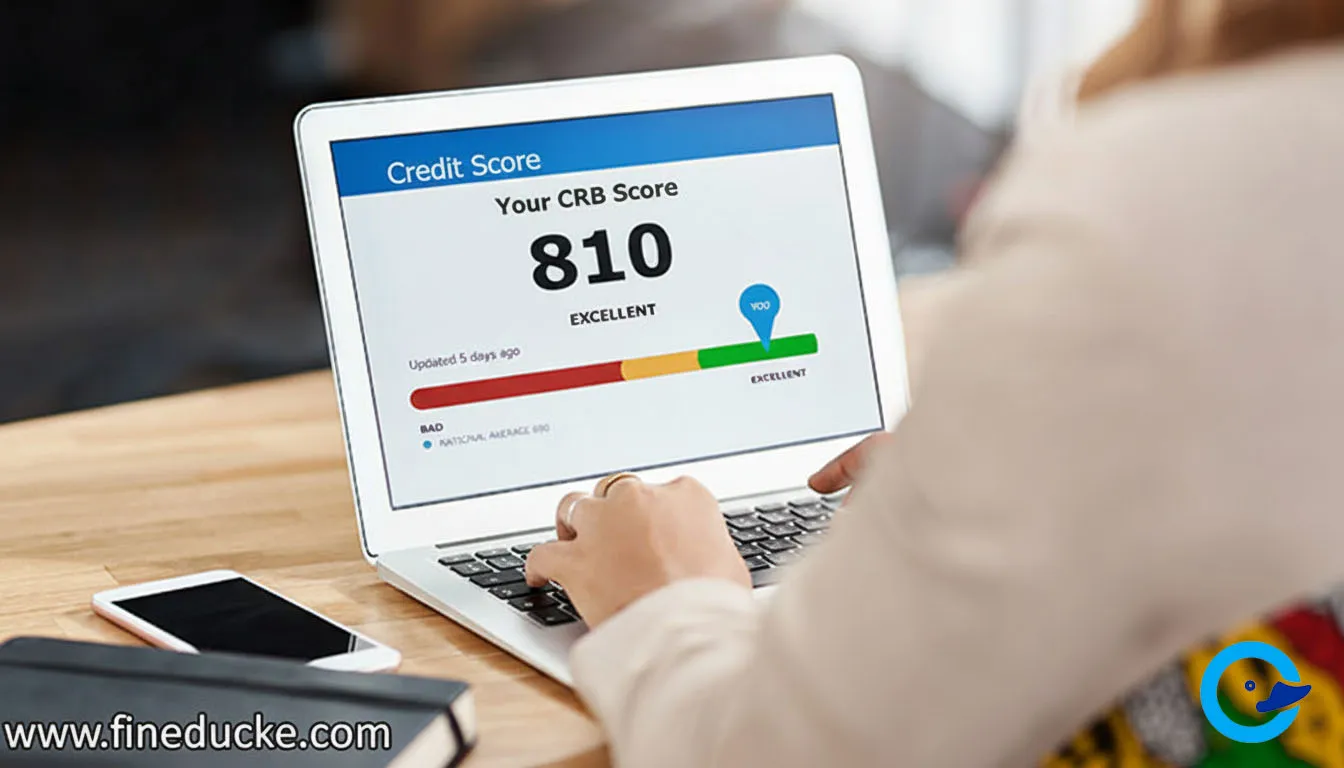
Metropol is an information and credit management company established in Kenya in 1996. It's licensed by CBK to provide CRB services to all banks. They began offering credit rating services to the public in 2006.
Step 1: Register with Metropol (One-Time Only)
Before checking your score, you'll need to register first. Here's how:
- Dial *433# using your registered Safaricom line
- Select "Listing Status"
- Enter your National ID
- Select Confirm Enter the ID of a Metropol agent if referred, or enter 0 if not referred
- Select Confirm Pay KES 100 via the prompted payment option, often MPESA via Paybill 220388. Use your ID number as the account no.
After completing the registration process, you'll receive a reference number from Metropol via SMS.
Important: You'll get an SMS with your unique PIN details, a reference number, and a special link that you can use for future access.
Step 2: How to Check Your Credit Score on Metropol Website
Once you've registered, follow these steps:
- Visit the Metropol website.
- Click on Click here to get your Credit Report and Certificate of Clearance.
- Sign in using your registered Safaricom number and a reference number.
- Download your CRB credit report from the website after logging in.
- The report contains your CRB status details.
Step 3: How to Download Your Full Report
After registering, you can log into the Metropol CRB Checker page using the reference no. you received via SMS. Note that you'll pay KES 250 to download the full detailed report.
Metropol Pricing Breakdown
- CRB Credit Score: KES 150 per year. You then get your credit score. Scores below 400 indicate you're a defaulter. Scores near 800-900 indicate excellent creditworthiness.
- CRB Credit Report: KES 250. The report has detailed information on institutions that have listed you
- Find Out Who Blacklisted You: KES 250. The report shows which lender reported you
- CRB Clearance Certificate: KES 2,200. You get proof that you have no non-performing accounts
Metropol Contact Information
- Physical Address: Barclays Plaza, 9th Floor, Loita Street, Nairobi
- Telephone: (+254) 709 834 000 or (+254) 730 884 000
- Email: creditbureau@metropol.co.ke
- Website: metropol.co.ke
Method 2: How to Check Your Credit Score via TransUnion
Similar to Metropol, you can also check your CRB status online or via SMS with TransUnion.
Option A: Check via Website
Follow these steps:
- Visit the TransUnion website.
- Scroll down to Know your score. Protect your credit.
- Click on Get Started.
- Fill out the form with personal details, mobile number, email, and address.
- Click on I Accept & Continue to Step 2 and follow the prompts.
- Your credit report contains details about your CRB status.
Option B: Check via Mobile App
Want to check on the go? Here's how:
- Download the TransUnion Nipashe mobile app from the Google Play Store or App Store.
- Provide your ID number and other personal details.
- Follow the on-screen instructions to access your CRB status.
Option C: Check via SMS (Quickest Method)
This is the fastest option if you're in a hurry:
- Text your full name and national ID to 21272
- Enter your ID number when prompted
- Choose "CC" (meaning Credit Status) Receive your CRB status via SMS
Registration Fee: KES 50, pay once to Safaricom Paybill number 212121 using your ID number as the account number.
TransUnion Pricing Breakdown
Credit Report: KES 650 What you get: Comprehensive credit report with your score and history
CRB Clearance Certificate: KES 2,200 What you get: Proof of no non-performing accounts
TransUnion Contact Information
- Physical Address: Prosperity House, Westlands Road, Off Museum Hill, Nairobi
- Telephone: (+254) 20 375 1799 or (+254) 730 651 000
- Email: info@transunion.com Website: transunion.co.ke
Method 3: Check Your Score via CreditInfo
CreditInfo helps banks and other credit providers manage debts by evaluating and monitoring customers. The company works primarily through email.
Steps to Get Your Report:
- Visit the official CreditInfo website.
- Click on Credit Report.
- Choose between personal or company credit report applications.
- Fill out a request form and submit it.
- You will receive your credit report via email.
- The report contains your CRB status details.
CreditInfo Contact Information
- Physical Address: Park Suites, Office 12, Second Floor, Parklands Road
- Postal Address: 38941-00623, Parklands, Nairobi
- Telephone: +254 20 375 7272
- Email: cikinfo@creditinfo.co.ke
- Website: creditinfo.co.ke
4. Credit Reference Bureaus (CRBs) in Kenya Explained
A credit reference bureau is a company mandated to collect, store, and organize credit information on individuals and businesses from multiple sources namely:
- Banks
- SACCOs
- Mobile lenders
- Microfinance institutions and
- Other credit providers.
It is licensed and regulated by the Central Bank of Kenya. Lenders are required to report data to CRBs so they can:
- Assess risk
- Reduce fraud
- Decide who qualifies for credit,
- Determine how much and terms for borrowing
The information collected typically includes your:
- Loan repayment history
- Active loans
- Late payments
- Defaults and overall borrowing behavior
When a lender wants to evaluate you, they request a credit report from a CRB to understand your creditworthiness.
Usually, CRBs do not charge lenders to update or share your records. Reporting data is free for all lenders. However, it is different when it comes to individuals as you are required to pay a small fee when requesting your own credit report or certificate of clearance.
In Kenya, the three licensed CRBs are Metropol, TransUnion, and CreditInfo. Each uses slightly different scoring models and report formats, which is why checking more than one can be useful.
Understanding Your Credit Score Range
Your credit score is a number between 200 and 900. Here's what it means:
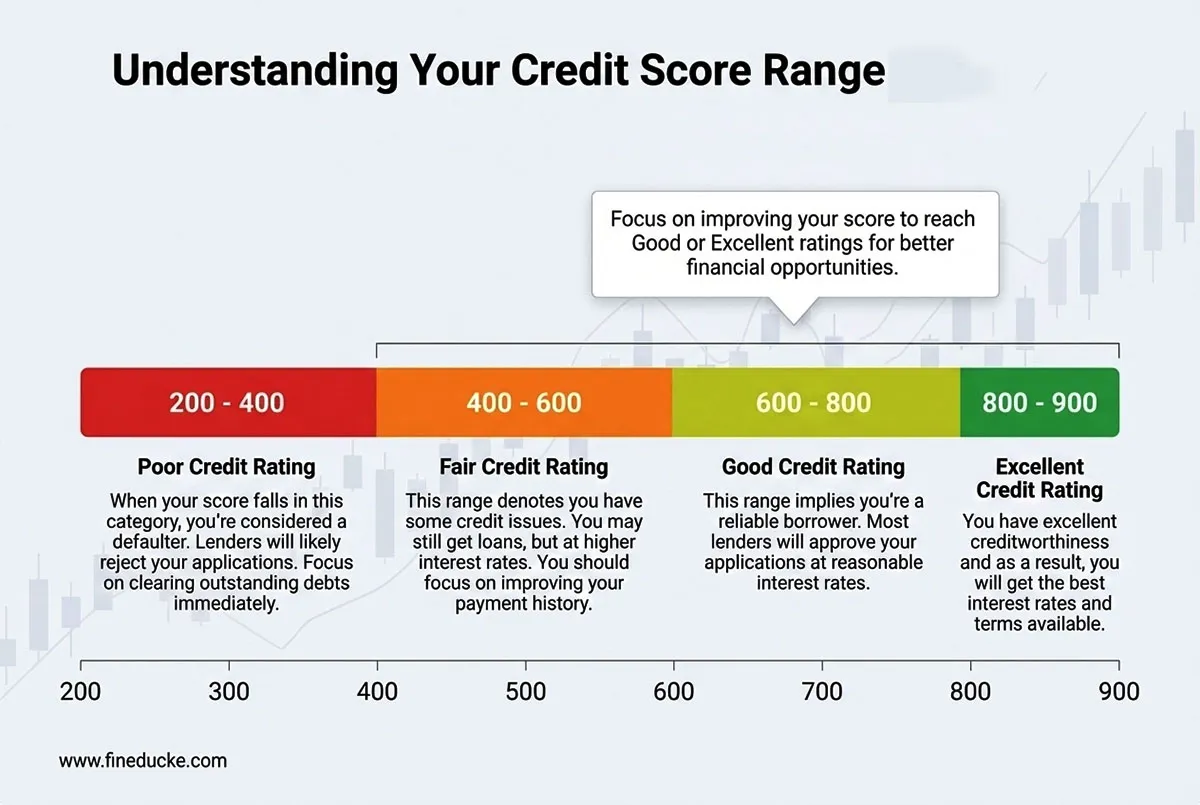
- 200-400: Poor Credit Rating. When your score falls in this category, you’re considered a defaulter. Lenders will likely reject your applications. Focus on clearing outstanding debts immediately.
- 400-600: Fair Credit Rating. This range denotes you have some credit issues. You may still get loans, but at higher interest rates. You should focus on improving your payment history.
- 600-800: Good Credit Rating. This range implies you're a reliable borrower. Most lenders will approve your applications at reasonable interest rates.
- 800-900: Excellent Credit Rating. You have excellent creditworthiness and as a result, you will get the best interest rates and terms available.
What to Do If You’re Blacklisted in Kenya: Step-by-step action plan
Being blacklisted doesn't mean you're stuck forever. Here's a good plan on how to get your name cleared.
Step 1: Understand Why You're Listed. You can use Metropol's "Who Has Listed Me" service (KES 250) to find out which institution reported you and why.
Step 2: Clear Your Debts Contact the lender that listed you and pay off the outstanding amount in full. Make sure to get written confirmation of payment.
Step 3: Wait for Updates, usually CRBs receive information daily. Once you've cleared your debt, the bureau will update your status within 30 days.
Step 4: Get a Clearance Certificate. You can get the cert by applying for a CRB clearance certificate from either Metropol, TransUnion, or CreditInfo (KES 2,200). This proves you have no non-performing accounts.
Step 5: Use Your Certificate Present your certificate when applying for loans, jobs, or business partnerships. It gives lenders and employers peace of mind.
Important: A certificate of clearance is valid as at the date of issue. Since CRBs receive information daily, your status could change. Therefore, it is imperative to your certificate current.
CRB Clearance Certificate Explained
A certificate of clearance (COC) is a document that confirms that you currently do not have a non-performing account.
Governmental and an increasing number of private sector employers are making it mandatory for prospective employees to present a Certificate of Clearance from one of the licensed CRBs
The COC may be used for:
- Know Your Employee (KYE)
- Know Your Customer (KYC)
- Know Your Agent (KYA)
- To clear yourself for business with other SMEs or corporate clients.
As earlier mentioned, it’s required when you need to present it to a lender after being adversely listed or when applying for employment.
The cost of a COC is KES 2,200, which is payable through M-Pesa or directly to the CRB bank account.
To clear yourself from CRB Kenya, the first step is clearing your debts. Next is applying for a CRB clearance certificate from TransUnion, Metropol, or CreditInfo via the respective websites.
Final Thoughts
Your credit score is a snapshot of your financial health. It's not permanent and it can improve with responsible financial behavior. By checking your score atleast once every year, you will be taking an important step toward financial freedom.
If you have any question, feel free to contact any of the three CRB providers listed above. They have helpful customer service teams ready to assist you.