




















Trans Nzoia County,
located in Kenya’s North Rift region, is widely known as the country’s “food
basket.” Its fertile land supports large-scale maize farming, dairy production,
and other agricultural ventures that contribute significantly to Kenya’s food
supply. Over the years, the county has also produced a remarkable number of
wealthy entrepreneurs, landowners, and political leaders whose investments
shape the region’s economy.
Unlike global
billionaire rankings dominated by tech founders or hedge fund managers, wealth
in Trans Nzoia often stems from agriculture, real estate, retail, and regional
commerce. Large farms, supermarket chains, hospitality businesses, and
commercial property portfolios form the backbone of many fortunes in the
county.
The list of the
richest people in Trans Nzoia in 2026 reflects this reality. Many of these
individuals built their wealth through decades of entrepreneurship, strategic
land acquisition, or public service careers that later translated into investments.
At the top of the
list is the Khetia family, whose retail empire grew from a small shop in
Kitale into one of Kenya’s most recognizable supermarket chains. Their success
story captures the broader theme of the county’s wealth landscape: humble beginnings,
strategic expansion, and a strong connection to local economic development.
Below is a closer
look at the 20 richest individuals and families shaping Trans Nzoia’s economic
story in 2026.
Key Takeaways
The Khetia family
sits comfortably at the top of the wealth ladder in Trans Nzoia. Their fortune
traces back to Khetias Drapers Limited, which began as a small wholesale
shop in Kitale in 1982. At the time, the founders sold household goods using a
pickup truck while operating a modest store in the Laini Moja area.
That small operation
evolved into Khetia’s Supermarkets, a retail chain with more than 20
branches across Kenya. The brand expanded rapidly after merging with Society
Stores, a business associated with Trushar Khetia. This strategic move
transformed the company into one of the country’s most recognized supermarket
chains.
Beyond retail, the
family diversified into logistics, wholesale distribution, and bottled water
production through Kabarnet Mineral Water. Their investments in property and
supply chain infrastructure helped strengthen the company’s market presence
while creating employment opportunities throughout western Kenya.
Today, the Khetia
family is not only a business powerhouse but also a major contributor to
regional economic development, supporting local suppliers and expanding access
to retail services across the country.
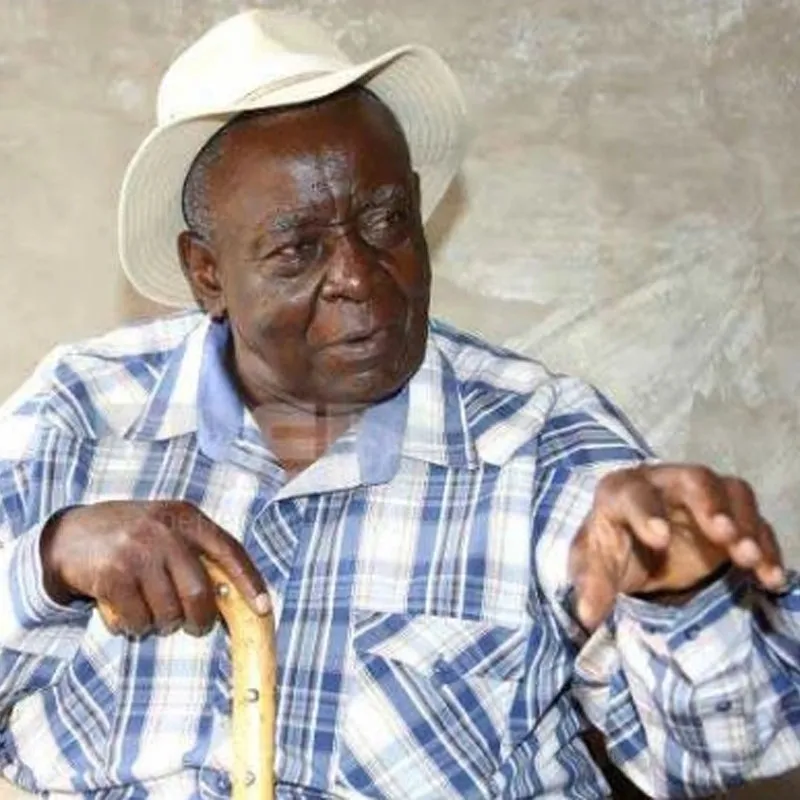
Ibrahim Ambwere’s
wealth story is one of the most dramatic rags-to-riches transformations in the
region. Born into poverty and with limited formal education, Ambwere began his
career working as a sweeper and later as a mason for an Asian contractor.
His breakthrough
came in the 1970s when he secured a tender to supply hospital beds to Kaimosi
Hospital. The contract generated significant profits and gave him the capital
needed to begin investing in land and commercial buildings.
Over the years,
Ambwere built a vast real estate portfolio spanning multiple towns in western
Kenya, including Kitale, Kakamega, Kisumu, and Chavakali. One of his most
notable properties is Ambwere Plaza, which houses offices used by government
institutions and private companies.
Despite his enormous
wealth, Ambwere is known for maintaining a relatively low public profile,
rarely discussing his finances publicly.
Jonathan Mayer is
one of the largest agricultural investors in the region. He owns the 850-acre
Gloucester Vale Farm, also known as Bubayi Farm, located near Mount Elgon.
Established in 1963,
the farm has grown into one of the most productive dairy operations in Kenya.
It supplies milk to major processors such as Bio Foods and operates advanced
seed production programs.
The farm also runs
the Bubayi Mbegu Plus initiative, which supports smallholder farmers by
providing improved seed varieties and agricultural training. These programs
have helped improve crop yields and strengthen food security across several
counties.
Through large-scale
agriculture and innovation in dairy and seed production, Mayer has built a
thriving agribusiness empire that plays a major role in the county’s farming
economy.
Engineer Samson Teela Akute built his fortune through engineering and agribusiness investments. A former Permanent Secretary in government, he later ventured heavily into private enterprise.
Akute owns vast
mechanized farms across Trans Nzoia where he focuses on modern agricultural
production methods. His operations include advanced irrigation systems and
agricultural infrastructure aimed at improving efficiency and productivity.
Outside agriculture,
he is the founder and director of SAMSAK Limited, an Eldoret-based
company. He also owns high-rise real estate developments in Kakamega town,
further diversifying his investment portfolio.
Akute’s career
reflects a common pattern among wealthy individuals in the region, combining
public service experience with strategic investments in land and business.
The family of the
late Alfred Momanyi Nyairo controls one of the largest private estates in Trans
Nzoia. Their wealth is rooted primarily in agriculture and land ownership.
The family’s estate
spans approximately 950 acres in the Sango area near Sabata Farm in Kiminini
Sub County. This large property hosts mechanized farming operations and
livestock production, making it one of the major agricultural ventures in the
region.
Through decades of
land investment and agricultural expansion, the Nyairo family has built a
substantial farming enterprise that continues to contribute to the county’s agricultural
output.
Burudi Nabwera is a
former diplomat whose wealth stems largely from strategic land and real estate
investments. After decades in public service, he leveraged his experience and
networks to build a portfolio of properties and business interests.
His investments
reflect a broader trend among former public officials who transitioned into
private sector ventures after leaving government.
The Kittony family
is one of the most influential business families in the region. Kiprono
Kittony, a prominent businessman and chairman of the Nairobi Securities
Exchange, plays a key role in managing the family’s ventures.
Their investments
include hospitality properties such as Cranes Haven Resort, Sirwo
Resort, and Cranes Suites in Trans Nzoia.
The family also has
shares in Radio Africa Group, a major media company that owns stations
such as Kiss FM, Classic 105, and Radio Jambo.

George Natembeya,
the governor of Trans Nzoia County, built his wealth through investments in
land and property alongside a long career in government administration.
Before entering
politics, he served as a regional commissioner, a position that placed him
among Kenya’s senior civil servants. For more information on Govornor Natembeya read this detailed George Natembeya Biography article.
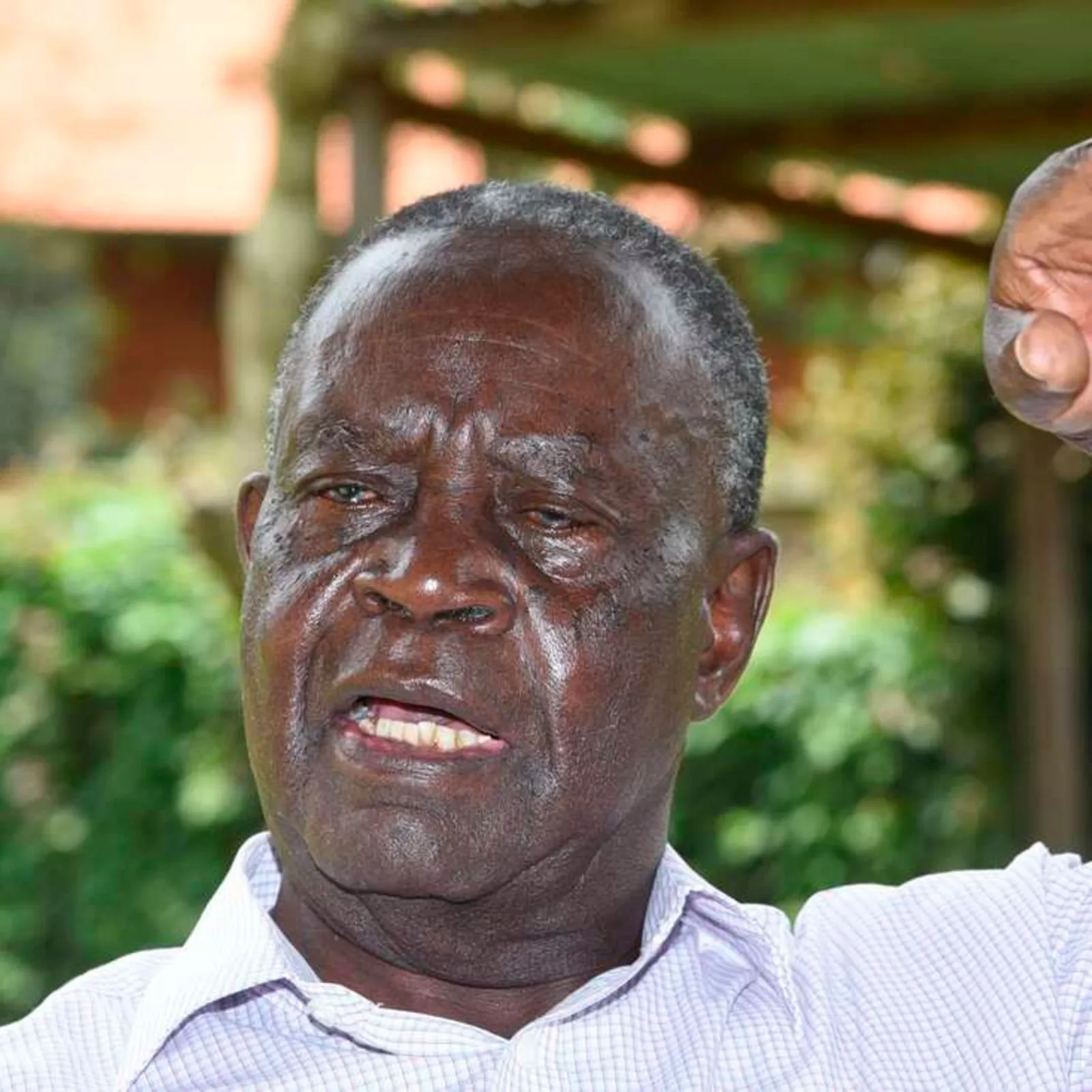
Former cabinet minister Dr. Noah Wekesa has invested heavily in agriculture. His business interests include large sugarcane farms and livestock operations in Trans Nzoia.
His political career
also helped shape regional development policies.
Entrepreneur and
politician Allan Chesang built his wealth through nightlife and logistics
businesses. He owns the Club Blend chain, Craft Lounge, and the
clearing and forwarding company Uplift Express.
Former Olympic
athlete Moses Kiptanui is one of the most notable examples of a sports
figure successfully transitioning into business. Best known globally for
dominating the 3,000-metre steeplechase during the 1990s, Kiptanui used his
athletics earnings and prize money to begin investing in agriculture after
retirement.
His flagship
investment is a 100-acre dairy farm in Cherangany, where he keeps over
100 cows capable of producing more than 1,000 litres of milk daily. The farm
also produces its own animal feeds to reduce operational costs and increase
profitability.
Beyond agriculture,
Kiptanui runs the Tulin Supermarket chain, with branches in Kitale,
Eldoret, Cherangany and Kachibora. The business integrates his agricultural
activities by selling dairy products and baked goods produced under the same
brand.
He has also invested
in commercial real estate, including the Komora Centre building in Eldoret,
which houses one of his supermarket outlets. Kiptanui’s journey from
world-record holder to agribusiness entrepreneur illustrates how sports fame
can evolve into long-term economic success.
David Wafula Wekesa
has built his wealth primarily through investments in education and property
development. Over the past two decades, he has established several private
educational institutions in and around Kitale, tapping into the region’s
growing demand for quality schooling.
His schools attract
students from across western Kenya and neighboring counties, creating a steady
income stream through tuition fees and related services. In addition to education,
Wekesa has invested heavily in commercial and residential real estate,
particularly rental housing and retail buildings in urban centers within Trans
Nzoia County.
Like many regional
investors, his strategy focuses on sectors with predictable demand, education
and housing. These industries have remained resilient even during economic
slowdowns.
Today, Wekesa’s
diversified portfolio of schools, rental properties and land holdings places
him among the wealthiest individuals in Trans Nzoia, with an estimated net
worth approaching KSh 900 million.
Esther Wanjiru is
among the most prominent female entrepreneurs in Trans Nzoia’s hospitality
industry. Her business career began in small-scale catering before expanding
into hospitality and agritourism ventures serving visitors traveling
across Kenya’s western region.
Over time, Wanjiru
developed several boutique accommodation facilities that combine hospitality
services with agricultural experiences. Visitors are able to tour working
farms, sample locally produced food products and participate in rural tourism
activities.
This model has
proven particularly successful as domestic tourism grows in Kenya. Agritourism
has become an emerging sector that allows landowners to diversify income beyond
traditional farming.
Wanjiru has also
invested in farmland used to supply produce to her hospitality businesses. This
vertically integrated approach reduces supply costs while enhancing the
authenticity of the guest experience.
With a net worth
estimated at KSh 790 million, she ranks among the wealthiest
businesswomen in Trans Nzoia County.
Paresh Tanna is
widely described as one of Kitale’s most discreet yet influential property
investors. Unlike many high-profile business figures, Tanna has maintained
a low public profile despite controlling significant commercial assets in the
town.
His most notable
investment is One Tanna Towers, a multi-storey commercial building
located in Kitale’s central business district opposite Transmatt Supermarket.
The property houses offices, retail outlets and professional services firms,
making it one of the most recognizable commercial structures in the town.
Real estate
investors like Tanna have benefited from the steady growth of Kitale as a
regional commercial hub. As agricultural trade and population increase, demand
for modern office space and retail premises has expanded.
Tanna’s portfolio
reportedly includes additional commercial properties and land holdings across
the county. His focus on long-term property development has helped him
accumulate an estimated KSh 700 million fortune.
Michael Kiplagat has
accumulated wealth through investments in logistics and agricultural
transportation, sectors closely tied to Trans Nzoia’s farming economy.
Often referred to as
Kenya’s “breadbasket,” Trans Nzoia produces large quantities of maize, wheat
and dairy products. Moving these goods efficiently to markets in cities such as
Eldoret, Kisumu and Nairobi is a critical part of the regional economy.
Kiplagat’s transport
operations specialize in moving agricultural produce from farms to processing
facilities and distribution centers. By focusing on this niche, he built a
reliable logistics network serving farmers and agribusiness companies.
Beyond transport,
Kiplagat has diversified into real estate and small commercial ventures,
particularly warehouses and storage facilities used for agricultural products.
His strategic
position within the county’s agricultural supply chain has enabled him to build
an estimated fortune of KSh 600 million, placing him among the region’s
notable mid-tier business investors.
Grace Chemutai is a
respected entrepreneur whose wealth stems from investments in healthcare
services and farming.
She began her career
in the pharmaceutical sector, establishing a chain of retail pharmacies serving
residents in Kitale and surrounding towns. The businesses gradually expanded
into private clinics offering outpatient medical services, responding to
the growing demand for accessible healthcare facilities in rural areas.
In addition to
healthcare, Chemutai has invested heavily in agriculture, owning farmland used
for dairy and crop production. This diversification has helped her stabilize
income while expanding her investment portfolio.
Entrepreneurs like
Chemutai have played a significant role in improving service delivery in
smaller Kenyan towns, particularly in healthcare where public facilities often
face capacity challenges.
Her combined
investments in pharmacies, clinics and agriculture have helped her build an
estimated net worth of KSh 500 million.
Joseph Wanyama has
built his wealth primarily through land acquisition and agricultural
investments in Trans Nzoia County.
Over the years, he
has accumulated significant acreage of farmland used for maize cultivation,
dairy farming and leasing arrangements with local farmers. Land ownership
remains one of the most reliable wealth-building strategies in agricultural
regions, and Wanyama has leveraged this advantage effectively.
He also owns several
commercial properties in Kitale town, including rental shops and office units
that generate consistent income.
Wanyama’s investment
philosophy centers on long-term asset appreciation rather than rapid expansion.
By acquiring land early and holding it for years, he has benefited from rising
property values as the county’s population and economic activity have grown.
With an estimated
net worth of KSh 400 million, Wanyama is among the notable property
investors shaping Trans Nzoia’s business landscape.
Eugene Wamalwa is a
prominent Kenyan politician and lawyer whose career spans both public service
and private enterprise.
He previously served
as Kenya’s Cabinet Secretary for Defence and earlier held other senior
government positions, including Cabinet Secretary for Devolution and Planning.
Before entering national politics, Wamalwa practiced law and served as a Member
of Parliament for Saboti constituency.
Outside politics,
Wamalwa has invested in agriculture, land and property development
within Trans Nzoia County. His agricultural interests include maize farming and
other commercial crops typical of the region.
Many Kenyan
political figures also maintain diversified investment portfolios to sustain
income beyond public service, and Wamalwa is no exception.
Combining legal
earnings, agricultural ventures and property investments, his wealth is
estimated at approximately KSh 400 million.
Daniel Muri is best
known as the founder of Kangaroo Shuttle, one of the most recognizable
public transport companies serving western Kenya.
He launched the
company around 2010 with a few seven-seater vans, aiming to introduce
order and discipline to the chaotic matatu transport system operating between
Kitale and Eldoret.
Unlike many
operators who competed aggressively for passengers, Muri emphasized
reliability, strict driver discipline and organized booking offices. This
strategy helped Kangaroo Shuttle attract loyal customers seeking predictable
travel schedules.
Over time the
business expanded rapidly. Today the company operates a fleet of more than
100 vehicles and provides passenger and parcel services across several
towns in the Rift Valley.
Muri’s story
illustrates how structured management and customer service can transform an
informal transport business into a major regional brand.
Zipporah Kittony is
a veteran Kenyan politician and businesswoman with deep roots in Trans Nzoia
County.
She previously
served as a nominated Member of Parliament and has been active in Kenyan
politics and community development for decades. Beyond politics, Kittony has
built a substantial business portfolio focused on hospitality and
agriculture.
Her family is
associated with several hospitality establishments in Trans Nzoia, including
resorts and accommodation facilities that cater to tourists and business
travelers visiting the region.
Kittony has also
invested in farmland used for cattle rearing and crop production, leveraging
the county’s fertile agricultural land.
Her career reflects
a combination of public service, entrepreneurship and long-term property
ownership, placing her among the county’s notable wealthy individuals with an
estimated fortune of KSh 350 million.
The Khetia family
is the richest in Trans Nzoia in 2026 with an estimated net worth of KSh 12
billion. Their wealth primarily comes from Khetia’s Supermarkets,
one of Kenya’s largest retail chains, along with logistics, property
investments, and bottled water production ventures.
Among the
individuals on this list, Zipporah Kittony stands out as one of the
wealthiest women from Trans Nzoia. Her family’s investments in hospitality,
agriculture, and media contribute to the Kittony family’s
multi-billion-shilling fortune.
The wealth landscape
of Trans Nzoia reflects the region’s economic strengths. Agriculture, land
ownership, retail trade, and hospitality dominate the list of industries that
generate fortunes in the county.
Many of the
individuals featured here began with modest beginnings, whether through small
retail businesses, farming ventures, or careers in public service. Over time,
strategic investments and persistence helped them build some of the largest
fortunes in the region.
Their businesses
continue to shape Trans Nzoia’s economic future, creating jobs, supporting
farmers, and driving regional development. In many ways, the county’s richest
individuals demonstrate a simple but powerful lesson about wealth creation:
long-term thinking, diversification, and resilience remain the foundation of
lasting success.
I am Eddah, a professional blogger specializing in wealth analysis and financial insights. As a contributor to Fineducke.com, I explore the world’s richest individuals, their net worth, and financial moves shaping economies. With a keen eye for detail, I turn complex data into engaging, easy-to-read content that informs and inspires


































Leave a Comment:
Please log in to leave a comment.
Comments:
No comments yet. Be the first to comment!